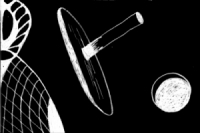
Grandpa’s Feet

Part 1, May

The Mansion

His face wizened and his body shrunken from its former robustness, Sam Oliver sat in his battery-powered wheelchair at the top of the staircase above the foyer of his mansion.

Grampa always looked old to me, even if he was only fifty-three, just over half my age when he died. He had nothing, yet he had what I don’t have—a loving child, Auntie Angie, beautiful Angelina. What a portrait Botticelli could have made of her, my angel auntie.

He allowed the ancient memory to coalesce into a vivid scene, so easily realized now. There she was, kneeling at Grampa’s gnarled feet, the feet of a waiter who worked 12 hours a day, six days a week to feed his motherless family. There was the bowl of steaming water laced with Epsom salt, waiting on the floor near his bare feet. His faded pajama pants were rolled over his knobby knees, exposing long but sparse hair on his ropy legs.

Sam remembered hiding on the floor of the portable wardrobe in the bedroom Grampa and Uncle Pete shared. It smelled of moth balls and old leather, not like the sweet, powdery smells where he, his mother and Auntie Angie slept. A seven-year-old could hide here forever without being noticed.

Angie was a nurse in training. She intended to join the Army Nurse Corps. She wanted to be a good nurse, and Grampa was her most important patient until she would receive her Army assignment. Maybe she would meet daddy there, in the war.

She learned to scrape and shave bunions and calluses, and to trim ingrown toenails—all of which Grampa’s feet had. He was sitting on the bench at the foot of the bed, his chest wrapped in a brown flannel bathrobe. His feet rested on the large towel on either side of the bowl of steaming water.

Auntie Angie was still in her nurse’s whites, but had taken off the bird-like cap and had laid it next to the smelly ashtray on the table next to the wardrobe. She lifted one of Grampa’s feet and let it slide gently into the bowl of water as she talked to him. He was too tired to talk, except for a few grunts of response. She told him of the young student nurses and doctors she worked with, stories of their backgrounds—where they came from and where they wanted to go after completing their education. He listened with his eyes closed, the corners of his mouth relaxing upward. The big alarm clock on the nearby table ticked off the seconds and minutes.

After Grampa’s foot soaked long enough, Angie gently removed it from the basin and placed it on the towel. Then she placed his other foot in the basin.

The foot on the towel was mostly hard and yellow, even if part of it was pink and soft-looking from the warm water.

Grampa’s toes and toenails fascinated him. They were ugly and clumpy, some of them twisted. It was the big toe on the exposed foot that was the most repulsive. It was swollen and purple from infection caused by the nail invading the underlying flesh.

But then Auntie Angie made Grampa’s toes beautiful. With her nurse’s tools she cleaned out the accumulated dead skin under each toenail and cut the clumpy, yellow nails. She carefully pried one of her tools under the nail that bit into Grampa’s big toe and, little by little, carved the nail away until the compressed flesh released its yellow pus and small bit of bright red blood. Only then did Grampa come alive with great sigh of pleasure, showing how painful it must have been. 

Angie then attended Grampa’s other foot. When she was done he leaned toward Angie, took her head in his cigarette-stained fingers, kissed her forehead and said, simply, “Angelina,” in his melodious Mediterranean accent, made rough by tobacco smoke. 

Then the image changed. Sam had now taken Grampa’s place and there was an angelic face near his knees, looking at him with love and saying pleasant things.

The reverie vanished as his nose twitched to the acrid odor of burnt cheese rising from the endless procession of frozen pizzas into and out of the large microwave oven in the kitchen at the far end of the building. It wasn’t as bad, at least, as the awful smell of overheated butter and popcorn that had earlier invaded his room.

The children have finally outlasted the weak discipline of the adults. He pondered whether he was chuckling or grumbling, but couldn’t decide.

He had lost track of the numbers of grandchildren, grand-nieces and –nephews, and now the following generation. He could evict them and their parents, of course, but despite all their carelessness and thoughtlessness and selfishness, he couldn’t bring himself to deny them the unearned benefits of being his relatives.

“Perhaps there’s one among them,” he said aloud, a phrase he had, until recently, only given thought to, countless times.

He was grateful he could not hear the racket below, which he could easily imagine. He rarely turned on his hearing aids. 

He wheeled his chair around, past the elevator, to return to his room. He was expecting Diana, his “chief of staff,” as he thought of her, and wanted to be prepared.

He lived in an apartment that extended across half the second floor of the three-story building. It had the amenities and services necessary for a couple with two children to live in comfortably. This was what it was originally designed for—a place where one of his children or, after his two sisters died, one of his nephews or nieces and their families could live. There were other such apartments in the mansion and in the attached addition where the servants and the single relatives lived.

Five of these apartments were occupied. The oldest offspring had fled the internecine warfare that physical closeness invited, having finally garnered all they could of his fortune, short of what they were to be bequeathed upon his death—and when, by God, was he ever going to die? He knew they said this, or something like it.

“I won’t give them the satisfaction,” he said under his breath.

     Diana wasn’t due for an hour. His preparations were merely to pass a damp cloth over his face and comb his sparse hair, having been fully bathed and dressed by his masseur before Sam went to the staircase over the foyer.

He moved his chair to the window in the living room to wait for Diana. He leaned forward to view the broad sweep of the estate—green lawns, flower and vegetable gardens, and coppices of native trees and bushes. Here is where man and nature have made a truce, a noble tension to be broken only when I finally stop breathing and others will oversee the property.

Techniques of medical science had kept his eyes clear, especially for seeing in the distance. This view was his greatest pleasure, now that his business and political victories were decades behind him.

“There are no victories in a family,” he muttered, not knowing what he really meant. He slumped back into his wheeled chair, lapsing into thoughtfulness as the hissing tinnitus in his ears provided familiar background.

The notion of “family” had confused him, always. It was like a great beast without boundaries. It had no constant shape; there was no way to control it. It threatened always to swallow you or run away from you. And, there was no one who would bathe an old man’s feet.

A sudden, unfocused view of the lower part of Diana´s dark blue business suit brought his head up. She was saying something, but he couldn’t understand. As he focused on her face she pointed to her ears, and he automatically reached behind his own to turn on his hearing aids.

“—something wrong with your feet?”

“Uh, no Diana, I was just muttering I guess.”

“Are you ready for the weekly report?”    

“Yes, yes, let’s go. Please sit down. You make me nervous standing there. Bring the chair closer—I don’t want to shout. You look wonderful, as usual, even though you are wearing pants with that suit. Don’t women wear skirts any more?”

“Most professional women wear slacks, now, Mr. Oliver. It tends to keep the men’s minds more on business…”

“… than funny business, you mean. It’s a good point, especially since there are so many women now where men used to be.”

“Do you want me to buzz Henry for something?”

“Ah, yes, some water with lime. Thank you. And tell him to get the kids out of the kitchen and clean up the mess. It must be a swamp down there. The smell has been with me all morning.”

Diana reached for a nearby walkie-talkie, one of many available everywhere in the old man’s apartment.

“Henry, it’s Miss Davies. I’m with Mr. Oliver. He would like some water with fresh lime, and a cup of black coffee for me, please. Mr. Oliver would like you to tell the children to leave the kitchen. Have them take all food outside on the patio and then ask Maude to clean the kitchen and put it off-limits for the rest of the day. Yes. Thank you.”

“Good.  Henry’s a better disciplinarian than I am. Their parents have given them no boundaries. Anything new from your end?”

“The new things are more of the old things. Franklin is getting further into debt and is getting panicky. Elizabeth has filed for divorce from Jerry…”

“I forget what number husband Jerry is.”

“… number three. And Theodore has started seeing a psychiatrist for his anxiety and depression. His AA group insisted on it.”

“Well, they’re all going have to stew in their own juices. I’m not rescuing any of them any more. Their trust fund income is enough to keep them from starving and sleeping under bridges. They can liquidate some of their assets. It’s enough for me to support their progeny, endlessly. How many are living in the house now?”

“Let me see… 18, if you don’t count the sleepovers. Most of the children are from your sisters, may they rest in peace—as they probably are doing, thanks to you. Henry seems to have the supply issues under control, but Maude is getting frazzled with all the cleanup.”

“Get her a part-time helper.”

“Part-time will mean low quality, I’m afraid. You need another live-in maid, a younger one that Maude can reasonably expect to boss and who won’t require too large a salary. I think we can find a young person from Europe who would like to do her wanderjahr or two in the USA, someone who could attend to your needs, as well. You’re not looking as natty as you like to be. Your masseur doesn’t have all the talents you need.”

“Hmph. As Captain Picard says, ‘make it so.’ Are you getting paid enough?”

“Mr. Oliver, you shouldn’t ask that of a lawyer. Your contract with the firm makes generous provision for my services.”

“I’ll take that as a yes. Other than Maude and Henry, you’re the only one who is kind to me, but of course I am paying you all. Please don’t respond to that. I’m getting crankier all the time.”

“Do you want Dr. Benjamin to visit you? More often, I mean? You mentioned your feet earlier. Are they bothering you?”

“No, No. I’m all right. And I get out of my chair often enough to get properly exercised—the therapist sees to that. He’s very tough and mean, but he’s good.”

“Is the catering service on time and satisfactory?”

“Yes, yes, but of course the nutritionist won’t give me what I want. She intends to keep me alive as long as possible. Her greed knows no bounds. Come closer. You smell especially good today, Diana.”

“Don’t get fresh, Mr. Oliver, your heart might go into tachycardia again.”

“Denied everything for my own good, right?”

“It’s the way you want it, isn’t it? To keep your progeny in a state of anxious anticipation?

“You know me too well, Diana. I feel naked in front of you, and that’s not an ironic invitation to anything.”

“Here’s Henry, now.”

“Good afternoon Miss Davies.”

“Hello, Henry. How did the children take it?”

“Surprisingly well, ma’am. They seem to know what’s right—they just have to be reminded.”

“Henry, I’m thinking of getting someone to help Maude. How about you? Do you need help with the chaos of the growing horde?”

“No, sir. The regular maintenance service keeps all the major appliances and household machinery in top shape, and the handyman and landscape services handle all the other tasks, so I have a reasonable number of duties to perform.”

“You’re too damned reasonable, Henry. You’re not getting younger, either. Are you getting enough sleep? Are you taking days off?”

“Please don’t worry, sir. I am quite comfortable and you provide for me generously.”

“Hmph.”

“Will that be all, sir?”

“Yes, yes, Henry. Back to the salt mines.”

“Thank you, sir.”

“Thank you for the coffee, Henry—it’s excellent, as usual. I’ll drop by to see Maude before I go, Henry. See you later.”

“Bye, ma’am.”

     “Now, how about you, Mr. Oliver?”

“Enough about me Diana, just get that girl from Europe so Maude can grow older a little more gracefully.”

“Do you want to interview the candidates?”

“No, no, I trust you Diana. I know, I know, a lawyer takes nothing for granted—no assumptions. You want it in writing? Don’t answer that. Do you have to go now?”

“I’m afraid I have a full calendar for the rest of the day.”

“Are you going to get married one of these days? I think you should, but I don’t want to lose you. What’s wrong with men these days? You’re a beautiful woman… oh, I’m sorry for going on, and I won’t mention children, either, and how a woman hasn’t got as much time as a man…”

“Dear, dear Mr. Oliver. It’s very hard to be completely professional with you. It isn’t a question of finding a good man; it’s a question of how to balance all the good things life has to offer. Having nice clients like you is part of the equation. Now that’s enough, but thanks for your concern and your compliments.   

“OK, off to the gold mines with you.”

“I’ll have someone in place for Maude, and you, within two months. I’ll offer enough income and time off to make the opportunity compelling.”

“OK, Diana. Next week, then.”

“Goodbye, Mr. Oliver.”

Part 2

July, Two Months Later
Sam Oliver’s Sitting Room

“Mr. Oliver, this is Linn Larsson. She’s from Uppsala, Sweden.”

“Hello, I’m glad you’re here. How’s your English?”

“Thank you Mr. Oliver. I learned English in school, since I was a little girl.”

“Well, I can understand you very well, and that’s what’s important. You just let Diana, Miss Davies know what you need and she’ll get it for you”

“Thank you.”

“Okay, now you know that Maude is your boss, yes?”

“Yes, Mr. Oliver, and I am to help you with any of your needs, too. I used to help my grannies.”

“Well, Linda…”

“Linn, it’s Linn…”

“A pretty name, Linn. I’ll remember it. Anyway, Miss Davies here seems to think I need to be spiffed up.”

“Spiffed?”

“Linn, Mr. Oliver likes to be well dressed and well groomed, which means being neat in his hair and fingernails and so forth. His masseur, the man who gives him massages and takes care of some personal needs is, well, best at massaging.”

“Okay, I understand. I will be happy to spiff you Mr. Oliver.”

“Ha! That’s the first happy thing I’ve heard in a while. Yes, spiff me! Ha! Well, we’ll talk about that later. I’m glad you’re here, I think I said that already, and I’m sure Maude will be glad too. She’s not getting any younger and the kids are getting more rambunctious. You know about children as well as older people?”

“Oh, yes. I have younger siblings and I have worked as a helper in a day care school.”

“Well, Diana Davies, you’ve done it again. Linn seems like a good person to have in the house. I’d like to be alone with Diana now, Linn, and please ask Maude to make me a small snack.”

“If it’s okay, Mr. Oliver, I can do this for you. I’ll ask Maude what you like.”

“You’re on the ball already. Good.”

“On the ball?”

“He means you already know what to do, Linn.”

“Okay, I’ll get the snack.”

Linn left the room quickly to accomplish her first task.

“Young Linn is a remarkable girl, Diana. How can she have had so much experience and be so good in English?”

“We had some luck. After her year here, she intends to study for a medical degree and she wants to improve her English. As you can tell, she has had her career in mind for some time—that’s why she has sought out so much experience in helping people.”

“Well, she’ll spoil us for any future helpers, but one year at a time. Now, what’s to report, Diana? I have nothing new to say.”

“Mr. Oliver, I recommend you consider accepting a visit from Theodore. According to what he told me yesterday, his psychiatrist says it’s important for him to say certain things to you. If you agree, it could be difficult for both of you, certainly for Theodore, but apparently there’s something he needs to say.”

“Well, I can’t think of how I could become more disturbed by Theodore than I have already been. You said you ‘recommend I consider.’ That’s kind of weasel-wordy, counselor. You don’t sound like you think I absolutely should do it.”

“Full disclosure as your attorney, and as a friend, requires me to say it might well disturb you.”

“Needs to stand up to the old man, does he? Might be a good thing for him, and I don’t see how it could harm me. I’ve been chest-to-chest with some pretty tough gangsters posing as capitalists. It might be refreshing.”   

“I’ll ask again, tomorrow, after you’ve had a chance to think it over.”

“I don’t need to think it over—I’ll do it. But you can call me tomorrow to verify it.”

“May I come in, Mr. Oliver?”

“Is that Linn already? Yes, come in and put the snack on the desk at the window. I like to look at the scenery when I eat. And did a little animal follow you in the room? What kind of an animal looks like a child?”

“Megan wants to follow me. I hope it’s all right.”

“Who is Megan, Diana?”

“She is your sister Lucille’s great-granddaughter. She’s seven years old. Her grandmother is your niece Evelyn Pierce, and her mother is Janet Pierce-Moran. Janet lives on the third floor with her husband James Moran. He’s employed in one of your companies.”

“How come she isn’t frightened of me like all the others?”

“Perhaps she would answer that question herself, Mr. Oliver.”

“Linn, please bring Megan with you and stand close to me so I can hear her little voice better. Yes, that’s good. Thank you.

“Megan, do you understand what I am saying?”

“Yes, Grander.”

“Grander? Is that what I am called by the children?”

“Yes, Grander.”

“What do you think ‘grander’ means?”

“You’re the oldest grand.”

“Grand?”

“You know—older than all the grandmas and grandpas.”

“Well, that’s true enough, Megan. Are you Linn’s assistant, her helper?”

“Maybe. I like Linn.”

“Well, well—you’re welcome to be here when Linn helps me, if it’s all right with her and if you don’t run around and make a lot of noise.”

“I won’t, I promise, Grander.”

“I’m getting tired now. Let me eat my snack, everyone.”

“Goodbye, Mr. Oliver. Let’s go now, girls.”

So Theodore needs to talk with me, or to me. How long has it been since we had a real talk, father to son, man to man? Years, many years. He was such a good boy when he was a child. Life is so hard on weak people.

And Linn, what kind of spiffing do I want from her? It’s embarrassing, but there’s no getting around the fact that I’m damn near helpless any more except in my wits and in speaking. I could use a woman’s touch in getting my clothes organized and chosen each day. She’s barely a woman, however, but she seems mature for her age. Maybe it’s her careful English. She looks strong, taller than Diana, rather pretty but not taken with herself like the young people in this house. She’s wants to be useful. Maybe she’ll teach little Megan something about that. Could be a good influence, if she allows her to tag along. Megan’s father—can’t remember him well. I guess he’s good enough if he’s working for me, or for the board of directors now. The companies aren’t about me anymore.

Look at the view. Summertime. Life in full, Nature’s glory. Maybe Linn will take Megan for a walk out there so I can enjoy watching them while they’re still innocent.

Where’s a walkie-talkie?

“Hello, Henry? Is Linn available for a chat with me? Good. We need an orientation—new employee and all that. Yes, if Megan wants to follow it’s all right with me if it’s all right with Linn.”

I wonder why Diana was less than direct in getting me to agree to see Theodore. Is there something going on? Well, something’s always going on. Can’t stop it. Might as well find out what it is, but it’s usually so tiring.

“I’m here, we’re here, Mr. Oliver.”

“Pull a chair over here next to me and we can both look out the window while we talk. Megan can sit on the carpet near us if she likes, it’s soft.”

“Okay.”

“Linn, it’s embarrassing for me to be so helpless and to need someone, especially a young person, to have to do things for me that I used to do for myself. I once had a good body, but now it’s just a wrinkled shell that keeps my innards together.”

“Innards?”

“My guts, what’s inside, including my brain, which seems to be the only innard that’s still working well. Anyway, I still can’t stand not to be neat and properly dressed. Part of getting neat is trimming the hair out of my ears and nose, and the wild hairs from my eyebrows, which the barber usually does okay. He gives me a good shave, too, so that’s taken care of when he’s here, but I need to be shaved more often. Some of what the masseur does is good or okay, but he’s not so good at shaving me, or in trimming my fingernails and toenails. I think he doesn’t like doing it, and I can’t blame him. And, I’m getting tired of telling him how I like to be dressed. He just can’t remember what I like and has no sense for it.”

“I have shaved older men and have trimmed fingernails and toenails for other people, also. I think I can learn how you like to be dressed. I think it would be fun.”

“Sort of like dressing a doll when you were a little girl, eh?”

“Oh, I don’t think so Mr. Oliver, it wouldn’t be like playing at all. It would like giving respect to someone, especially for you. Maybe fun is the wrong word. Maybe enjoy is the right word. I would feel important helping you and doing it right.”

“You’re a fine young woman, and you’re making it easy for me to accept you having to see and touch the me I can’t stand to look at anymore.”

“In school we talked about whether the body is the self, or if the self was something else. It was filosofi. I can see you as someone, right now, without seeing more than your head and your hands. And I see what you say, also. What you say and what you do tells me about your self. Anyway, young people need good-looking bodies so they can attract a mate and have children. I think you don’t need to do that anymore, Mr. Oliver.”

“Hahaha! That’s the second time you’ve made me laugh. Okay, I’ll turn my withered body over to you without feeling ugly and ashamed. And, if you want to treat me as an old doll, that’s okay too.

“Tomorrow morning, after the masseur is through with massaging me, go along with him as he selects my clothes for the day to get a feel for where everything is and what the process is. I’ll tell Diana to give him notice of this so he’ll call for you when he’s ready.

“As for trimming my nails, hand and foot, let’s get started now, so the masseur isn’t tempted to try it tomorrow.”

“Okay, Mr. Oliver. Since you like to sit at this window, I’ll set up to do it here, with some protection for the carpet.”

“Protection?”

“I need to soak your hands and feet in warm water to soften the nails. This makes it easier to cut the nails and less chance of cutting the skin.”

“Well, you seem to know what to do. Make it so.”

Sam Oliver became relaxed and thoughtful as Linn went about preparing for her work, with Megan tagging behind. A young woman is about to soak his feet and cut his toenails. Visions of Auntie Angie begin to float in front of him, combining with the tall, supple figure of Linn. He leans back in his chair to let the familiar reverie envelope him. He is aware of his fingers soaking in a bowl of warm water and, in a while, feels his nails being gently trimmed. Linn’s hands are soft and strong and full of youthful energy. Sam’s arms thrill to her touch. He is aware of little Megan intently and quietly peering at his hands from beside Linn.

Now, he knows, will come the soaking of his feet. His feelings are almost sexual, as if anticipating a climax. As he remains relaxed in his chair, he feels Linn gently removing his slippers and socks, their bareness making him feel completely naked. Linn places one foot gently into a pan of warm water. Sam feels transformed into his Grampa and relives the familiar scene.

He hears Megan say “his feet are so little and pretty.”

This remark breaks through the ancient image of his Grampa’s gnarled feet, making it quickly fade.

Fully conscious of the present, he allows himself to enjoy the new feelings that Linn’s manipulations give him, so different from the masseur’s.

“My aunt Angie used to massage my Grampa’s feet after clipping his toenails. His feet were always very tired from his work as a waiter.”

“I can do this too, for you, if you like.”

“Yes.”

As Linn’s strong hands and fingers press his soft feet, he feels more alive, that he really has a body again.

Then Megan places her face very close his head and asks, ”can I massage your other foot Grander?”

“Yes.”

Linn is through massaging his left foot. She leaves it uncovered beside the bowl of water. Sam’s right foot has soaked long enough, so she removes it from the bowl, puts the bowl aside, and dries his foot. Linn then trims the nails of this foot. Sam can sense Megan’s anticipation in getting her turn to massage his other foot.

When Linn finishes trimming the nails and moves away, Megan kneels down to hold Sam’s right foot in her soft hands, which are large enough, together, to completely envelope the sole and arch of his small foot.

He sees an angel in front of him.

Part 3

Next Day

Sam Oliver’s Bedroom,

“That was the best massage you have given me, Robert.”

“Thank you Mr. Oliver, but it was the same as always from my end. Your body did seem more relaxed than usual.”

“Maybe it’s all the extra help I’ve been getting recently. Call Linn into the bedroom now and show her the drill on getting me dressed.”

Linn arrived quickly upon Robert’s call on a walkie-talkie, having been waiting in the living room with Theodore and Megan.

“Is Theodore here yet Linn?”

“Yes, Mr. Oliver, and we have been getting to know each other. Megan introduced us. He is her cousin, I think. I hope it’s alright that Megan is here.”

“It’s up to Theodore. It’s his meeting.”

Robert quickly acquainted Linn with the closets and drawers containing Sam’s clothes and accessories. Together they selected his clothing for the day, and Linn watched while Robert dressed him, and then helped him into his wheelchair.

“What do you think, Linn? Seem like a job you can do? Are you strong enough to move me around like Robert does?”

“Oh, yes. I like all your clothes. There’s so much to choose from each day. And, yes, I am strong. Haven’t you heard about how strong Swedish women are?”

“Are you trying to make me laugh again Linn? Come on. Let’s go see Theodore. It will be a private conversation, unless he decides to keep Megan around.”

Sam felt refreshed and strong as he powered his wheelchair toward the bedroom exit. Robert strode quickly ahead to open the door. Sam glided his chair into the living room toward where Theodore stood facing the large window, looking at the garden. Megan was holding Theodore’s right hand.

Linn and Robert quickly left the apartment by the door into the second floor hallway, as Sam rolled to Theodore’s left side. He faced the window along with his son and Megan.

“Hello, Theo. I see you and Megan are friends.”

Theodore turned his head to look at his father. Sam was shocked to see how Theodore’s face had aged since he last saw him. How long has it been?

The three remained side-by-side as they continued talking.

“Oh, yes, Megan is my god-daughter. This makes us special friends. Is it all right if she stays with us while we talk?”

Sam thought that Theodore might be using Megan to cause him to soften any hard remarks he might make to Theodore, but he himself liked having Megan around.

“Of course, Theo. I feel I’ve become friends with Megan too. Now what is it we need to talk about?”

“I’m getting old, father. So are Beth and Frank.”

“Yes, of course, we all are. But what can we do about it?”

“Do you know how old I am, father? Seventy-nine. That’s beyond the average life expectancy for a white male, even one who has taken care of himself, which I haven’t.”

“You mean, you abused yourself.”

“You’re right, of course dad, and that’s the issue. I could die before you die.”

Upon hearing this, Sam felt a sudden emptiness in the middle of his body. He dwelt upon this feeling as Theodore continued.

“Your children are all in their seventies. None of us has taken good care of ourselves, certainly not like you’ve cared for yourself. You seem indestructible. We could all die before you do.”

Sam moved his chair to face Theodore, his back to the window, so he could look directly into Theodore’s eyes. They were misted with tears.

“Theo, Theo, what is all this about death and dying”?

Theodore sucked in a deep breath and said, gently but directly, “we want to be friends with you again before any of us die. We are tired and frightened of the distance amongst us and with you. We want to be a family again before one of us dies. We haven’t been all together since mother left us.”

At this, Theodore wept openly.

“What do you say, dad, can we all get together? Can we just all be in the same room together without bickering and fault-finding and voicing disappointments with each other? Could we do it now? Beth and Frank are downstairs. Can I call them up to be here with us, all together again?”

Sam had no tears to yield from his ancient body, but he drooped and slumped in his chair as he felt the weight of his son’s pain.

As Megan continued holding Theodore’s right hand, she moved toward Sam to take his left hand which was lying limply in his lap.

“Grander, please cheer up. It will be fun to have all my oldest grannies here. We can talk about old times!”

Megan’s cheerful, chirrupy voice broke through the gloom. Both Sam and Theodore began to giggle like children.

Part 4

Three Days Later

Sam Oliver’s Sitting Room

Sam Oliver sat in his wheelchair facing the window overlooking his garden. It was raining, moderately but steadily, with no wind to lash the raindrops at his window.

Man has no business in this affair. The plants and the sky are communicating. The plants will attempt to ambush the gardeners after this nourishment. There is that little pond that wants still to exist, even after we have drained it many times. Perhaps we should just let it be.

Sam Oliver’s thoughts drifted, again, to the unexpected and surprisingly pleasant reunion with his children three days ago. He reviewed, still again, the conclusions he had come to as a result of the meeting.

I can’t fully understand my motives, but it seems the right thing to do. I still feel good about it. I hope Diana won’t give me an argument. She is a strong and good person and is a faithful counselor to me for my benefit, as she sees it. Where’s that walkie-talkie?

“Henry, when Miss Davies arrives please tell her to come directly to me at the window. We won’t need refreshments and will want no interruptions. Yes. Thank you.”

Well, is this the last piece of business for me? If so, I think I may have just enough energy for it.

Diana Davies, J.D., M.B.A arrived silently to Sam Oliver’s side, her delicate perfume preceding her as she approached the window.

“Hello, Diana. Welcome to the real world, outside there.”

“Nature’s beautiful pageant renewing itself,” she responded.

They remained facing the window, he seated, she standing. Moments passed before Diana walked to a chair facing away from the window.

”How was your meeting with Theodore?”

Sam turned his chair to face her.

“Dear friend and counselor, I know you well enough to know you have asked Theodore the same question and you have his version. What can you tell me, Diana?”

“I can tell you he seemed relaxed and pleased.” 

“Very well, then, you haven’t violated any confidences but you have captured the atmosphere of the meeting well. You know, of course, that he had Beth and Frank waiting in the wings and we had a pleasant reunion, with little Megan as our, our… facilitator, you might say.”

“I heard that you referred to her as an angel.”

“I suppose I was being a bit dramatic due to the emotionality of the occasion, but I think she does have some special qualities. Ever since she attached to Linn and came into my life, I seem to have grown a new sense organ. Maybe Megan has caused me to remember some things I had forgotten. Anyway, all this tittle-tattle is relevant to why I asked you here today. I want to change the way my estate will be managed after my death.”

“Please tell me what has changed, Mr. Oliver.”

“First, something in me has relaxed and I feel I haven’t much time left for important decisions. This is a relief, not a complaint or a morbid preoccupation. You said a few months ago I wanted to keep my progeny, as you put it, in a state of anxious anticipation. Well, the anxieties of my children have been expressed directly to me now and I see that it has little to do with the disposition of the assets I control. I have been a stupid man. It’s too late to change my legacy, but I can add to it. Please get and turn on that audio recorder you have in your briefcase. Here’s what I want.

Sam took several deep breaths as Diana retrieved the recorder and her note pad.

“I’m ready, Mr. Oliver.”

“Upon my death, all residents of the mansion are to be given notice that they will have to find new living quarters within two years. I’ve enslaved them with my so-called generosity long enough. The mansion is to be turned over to a trust, to be set up by your firm, for the housing of unfortunate people. I don’t care what kind of unfortunate people—unwed mothers, orphans, people recovering from addictions, whatever. The trustees will be my children, for as long as they live of course, and it mightn’t be too long for any of them. Upon my death each of the trustees, that is my children, are to name a trustee-designate to replace him or her upon their respective deaths, and this is to continue ad infinitum.

“I want Megan to be appointed as an additional trustee upon her reaching age 25, and she will have the same obligation to name a successor. The compensation of the trustees is to be modest, based on the norm for non-profit organizations.

“I want my death to be a quiet event, with no big gatherings and hoopla. Nothing organized by the trustees of the estate or any organization I am connected to. Of course, I can’t control what any individual may want to do. I have no instructions on the disposition of the body that remains after my death. Let my children decide. I want no statues or grandiose memorials. I want the useful works to be done in the mansion to be my legacy.

“That’s all. All the other provisions in my will can remain. Oh yes, the costs of setting up and properly capitalizing the trust governing the works of the mansion are to be taken from the liquid assets of the estate before distribution to the designated heirs.

“Please have the notes and recording of this conversation memorialized as soon as possible.

“Do you have any professional objections or recommendations to my instructions?”

“I can think of none, Mr. Oliver.”

“I’m tired.”

“Mr. Oliver, I’ve turned off the recorder. It would be presumptuous for me to add my thoughts to what you have just said and accomplished. Please allow me to say that I love and admire you. That is all, and don’t feel you can take any liberties with me for having said this.”

“Oh, Diana. I would laugh and cry if I had the strength. You have filled a spot left empty by my wife who died too young. Not a romantic spot, although it has been fun to joke about it, but a partnership of some kind that doesn’t lend itself to words. I’m really too tired to continue talking. Let me rest a while here in front of the window. Please tell Linn and Megan I’ll be ready for their weekly attention in an hour.

“Goodbye, Diana. Please get married and have some babies.”

“See you later, Mr. Oliver. I’ll consider your suggestion.”

As he rested in front of his window overlooking the garden, Sam’s heart seemed to grow large inside him. It seemed to fill his shrunken chest. He let himself sense the feeling without thinking about it and dozed the full hour before Linn and Megan arrived.

“May we come in Mr. Oliver?”

“Yes, yes, Linn. Has it been an hour already? I guess so or you wouldn’t be here.”

“Shall we begin with a shave today?”

“No, Linn. All I want today is a footbath and massage. It’s all I have the energy for. It’s been a tiring few days, even if they have been good days.”

“All right, Megan I will take a few minutes to prepare everything.”

Sam relapsed into his doze. He felt comforted by the now familiar first touch of Linn’s hand on his feet as she removed his slippers and socks. The warm water on his feet suffused throughout his body and surrounded merged with the feeling of his seemingly now larger heart.

It had become Megan’s sole responsibility to massage Sam’s feet after Linn had bathed them and performed the pedicure. Vivid images of Grampa and his feet appeared to Sam. As Megan stroked his soft and tiny feet Sam remembered Grampa’s rough and big feet, and how his angel auntie stroked them with love and tenderness.

Sam’s heart grows larger and larger until it fills the universe…

END

A Fortuitous Social Event

A Fortuitous Social Event at a Conference in “Hidden Valley”

The meeting was at a resort in the Ojai Valley, 20 miles and two mountain ranges east of Santa Barbara, and a similar distance north, on a 2-lane highway, of the count seat, Ventura.

The conference center justly advertised itself thus:

The Inn accommodates groups of ten to four hundred and fifty. Sun splashed courtyards, tranquil fountains, warm fireplaces and rich wood accentuate the Inn’s two ballrooms, providing the perfect setting for groups to come together and exchange ideas or socialize.  A few of the many venue enhancements at the Ojai Valley Inn & Spa include an expansive new Conference Center with two beautiful ballrooms; and many meeting and breakout rooms. Enjoy the beautiful outdoor paseos – warmed by the natural light of gas lamps and fireplaces – and invite your meeting attendees to gather and socialize.

It was rather an important conference: “The Healthcare Safety Net: Effective Collaboration between Public and Private Healthcare Providers.” I typically detest such gatherings where, among other more professional speakers, grandstanding state and national politicos and their government lackeys show us what regulatory mayhem they are planning for those of us who do real work.

The brief drive south on highway 101 from Silicon Valley to Gilroy, the “Garlic Capital of the World,” showed me the wisdom of my plan to start early. Even at 5AM, the eight-lane freeway was beginning to clog with trucks entering from the adjacent industrial parks and produce factories. But, as a pleasant counter-balance, the usual southerly flow of air from Gilroy gave my nose and palate a taste of the onions and garlic growing there.

I was suddenly freed from the growing torrent of machines as I turned left at Gilroy and east toward Pacheco Pass, to get me over the Diablo Range and into the great Central Valley.

This brief trip over a winding, four-lane highway through hills and farmland was a delight to my eye in mid-spring. I drank in the welcome sight of golden poppies along the roadside and bright yellow wild mustard in swatches over the newly-greened mountains and their foothills surrounding the farm land.  I was no longer in the Bay Area, or Bayarrhea, as my pal Fred calls it.

The passing farms presented orderly rows of dark green vegetables, and fields of newly emerging fodder for later use by feedlots and ranches throughout the coastal valleys. Where the earth was tilled but still unsown, it was dark and moist, smelling rank and fertile.  Strawberry fields were prepared with plastic layers of protective cover, reflecting the early morning sun at an acute angle into my eyes.

As I came over the crest of the pass I was not disappointed to feel, as always on this drive, a sense of freedom, soaring over the low mountain range along with the ever-hovering hawks and kites and turkey buzzards, down into the great valley.

The medium-size ballroom cum meeting room was prepared for around 150 people, I reckoned with a quick glance at the rows of folding chairs facing the podium in a gentle curve. I arrived early, as usual, to secure my favorite seat at such gatherings: in the second row from the front, at the very right facing the podium, on the aisle along the wall. This position gained me several advantages: I could leave quickly and unobtrusively if the proceedings began to bore me; I could watch the speaker’s full body to monitor his or her involuntary body language while listening to the prepared remarks; and, if I wanted to get a word with an interesting speaker at the end of the presentation, I was in a position to get to the podium quickly.

As I waited for the room to fill I defocused a bit and allowed my attention to wander to my surroundings. I usually don’t care about the furnishings and decorations of a meeting room, as long as they don’t insult my eyes with garish colors, ungraceful shapes, or highly reflective elements that are sometimes part of the current cuteness that parades as fashion.  I was grateful to see that the room was not too bright. Several skylights allowed indirect sunlight to suffuse the room fully, supplemented by soft lighting ringing the room well above eye level. As a nod to fashion, there were two largely non-functional but relatively unobtrusive chandeliers. The walls were a sort of beige, vaguely tinted in a color I didn’t feel the need to categorize. On three of the room’s walls were several large, rather well-done oil paintings of local nature, mountain and ranch scenes, with discreet price tags affixed. They hung with sufficient space around them to be able to regard them individually, and I did, thinking I might look more closely later for a possible purchase.

I became aware of shuffling feet and papers, and conversations were elevating the noise level, so I abandoned this attention to the room’s detail and directed it toward the assembling crowd. I had already looked at the list of registered attendees, and I recognized the names of a few friendly colleagues from California. Some of the other names were familiar by reputation, and I thought it might be interesting, perhaps useful, to meet a few of these people at the organized social events.

As I slowly gazed around from my vantage point I suddenly felt the weight of age on my shoulders. Here were people in my cohort, plus or minus a few years, all looking gray and tired. A well of fellow-feeling arose in my chest as I recognized in them, correctly or not, the difficult labors these professional hospital and medical managers undertake in service to their respective communities. The feeling passed, as I rationalized that everyone had to do something, and growing older was inevitable.

At the appointed time of the address, the crowd parted and started seating themselves, allowing a purposeful person to stride vigorously and gracefully down the center aisle toward the podium. I assumed this well-dressed woman was to introduce the speaker, the Congressman from Indiana, Bert Paulson, Chairman of the House Subcommittee on Health.

As she passed by me to gain access to the stage, the slight breeze created by her passage wafted a delicate, unidentifiable scent over me. I suddenly was more alert to my surroundings, especially her. She was dressed as an easterner, not casually as most of the people in the audience were.

I was grateful she was wearing a skirt which seemed part of a suit, in a light red-rose-color, not pink. She had a small multicolored scarf at her throat, fastened with an ivory clasp which matched the tone of her skin seen above it.

I was immediately focused, however, on her skirt, especially just at her barely exposed knee; it seemed of a finely woven fabric, perhaps linen or silk—the skirt, not the nicely rounded knee. After perusing her well-shaped legs for a few moments, I took in the rest of her. She looked quite business-like but relaxed, with a friendly look around her eyes and mouth. She stood erectly without appearing stiff, and her small movements were generally graceful.

She made a motion at the podium that she was to begin speaking, and the crowd went mostly silent. She adjusted the position of the microphone, lightly tapped it to test the sound level with a polished but uncolored fingernail, and then raised her head to smile at the audience. Her teeth were small and even, both upper and lower teeth showing.

“Good morning ladies and gentlemen. I am Phyllis Durbin, chief legislative counsel to the House Subcommittee on Health, of which Congressman Paulson is Chairman. He was unexpectedly called away to urgent business elsewhere and I hope you will remain seated as I attempt to fulfill his duties here today.”

The audience murmured a bit as it digested this information. I felt quite all right with this news because I already knew, as most people present did, what the Congressman’s views were, and I looked forward to drinking in the sight and sound of this lovely woman, especially from my vantage point.

Her shoes were of medium size, seemingly made of fine leather, colored in a reddish brown, and with one-inch heels. As she began speaking, I noted she occasionally rose on the balls of her feet when emphasizing a point, the resultant tension outlining the fine muscles of her calves against her tight, sheer stockings.

Her general profile was classic, as far as the covering clothing could reveal to me. I could easily imagine her posed as a Greek nymph for a renaissance artist or sculptor.

Her skin’s ivory tone glowed in a way that seemed inherent, not applied. Her eyes and hair were dark, and I sensed a Mediterranean heritage. I had to admit to myself she looked extremely tasty. The thought created such a reaction in me that I decided to focus on the content of her speech so I wouldn’t embarrass myself if I were to stand up.

I went up to her after her speech to register my disagreement with her and the Chairman’s assumption about the willingness and ability of private sector doctors to integrate indigent patients into their private practices.

We agreed to meet for dinner to discuss it further.

Regarding Uncle Dave

  1. Roseville, California

 “Ned, it’s Rob on the phone. It sounds important.” Marge Bosco was in the kitchen preparing dinner.

“OK, Marge, I’ll take it in the computer room.”

Jeez, just what I need right now, more important news.

Ned rose wearily from his recliner in front of the dormant TV and headed into the next room. He sat at his desk, picked up the headset and punched a button.

“Hi, buddy, just a second… I’ve got it Marge. You can hang up now!… What’s going on? It’s too early in the year for a visit.”

“Mom died,” Rob croaked in Ned’s earpieces.

“Jee-sus! When, uh, where are you?”

“I’m at the house. And that’s just the end of the story. Dad and Uncle Dave died two weeks before mom went.”

Ned could hear pain in Rob’s voice, something he had never heard in the twelve years of their friendship.

“Christ! Were they all in an accident or somethin’?”

“It’s a long story. Look, I’ve got compassionate leave from the company for a month. Can we get together? I hate talking about this stuff on the phone.”

“Sure, Rob. Let’s see, it’s Wednesday… I’ll book a cabin at the lakes and we can meet there on Friday afternoon. Let’s spend the weekend there. I’ll take off work Friday and Monday. There shouldn’t be trouble getting a place this early in the year. I’ll take care of it. Just show up, OK?”

“Yeah, thanks buddy. I’ll be finished with everything here at Mom’s house by tomorrow. Signing off now, see ya Friday.”

“OK, Rob.”

Ned took off his headset, punched the off button and leaned back in his chair.

God, everyone’s got troubles. I’m not the only one.

He pushed down hard on the arms of the chair to rise up, feeling like an old man, and walked into the kitchen.

“What was that all about, hon?”

“Man, Rob’s in a world of hurt. His dad, mom and uncle have all died this month.”

“My goodness, how awful! Was it an accident?”

“Don’t know yet. I’m gonna take off for the Lakes and meet him there so he can unload. He’s always been the strong one, and this time I’ve got to be strong for him.”

“Are you going to tell him about… you know?”

“Nah, this is all about Rob right now. And Rob’ll tell me all about the accident, or whatever it was. I’ll get someone to cover for me at the shop. I’ve got a lot of vacation time on the books.”

“You could use the time away, Ned.”

“I’ll call the lodge right now and have them hold a cabin for two. Thank God it’s too early in the season for most tourists.”

2. On the road to Virginia Lakes Resort

Ned’s Jeep Wagoneer was always ready for a fishing or hiking trip. Before leaving Roseville the following morning, he stopped by a strip mall to buy whisky, beer and groceries.

He had around five hours to think while driving east from the middle of the Central Valley over several high passes in the Sierra Nevada, and ultimately to the resort at nearly ten thousand feet on the lee slope of the mountains.

Good to be getting out of the Valley. It always feels cleaner in the mountains. Nothing like somebody else’s bad luck to make you get your own situation in perspective. Jeez, with all his oldsters gone, I’m the only sort of relative Rob has. How long since we’ve been together at the Lakes? Too many years. No fishing this time. Just whiskey and talk, I guess, unless Rob’s got his usual surprise for me.

Ned wouldn’t get the familiar mountain feeling until after getting well past Placerville on US Highway 50, somewhere between 2500 and 3000 feet of elevation.

There’s the smell of the trees, and here I am again. Too bad it has to be when things are so down for Rob and me. Man, so much has happened since we were in the Coast Guard. It’s like we were children then, the mischief brothers. Now we’re grown up with all the responsibilities and troubles of the world to deal with. But those days of boats and Alaska and danger welded us together, closer than brothers. I owe him my life. Maybe this time I can be the one to sort of save his life.

The road continued to rise, through several tight turns, toward Echo summit at 7400 feet.

God, it’s good to feel my lungs start working for the oxygen. I wonder what Rob will do now? Will he just stay in New Orleans or will he come back home? I’m the only one he’s got on the West Coast now. What If I never see him after this? Christ, I shouldn’t get myself deeper in the dumps with this kind of thinking.

Even though the past winter’s snow and ice was cleared or melted off the road, Rob knew to be careful about wet spots and the sudden appearance of big rigs dancing over the center line around tight curves.

I guess Rob still hasn’t settled down. I wonder which way is best? Well, we’re different, that’s all.

Ned pulled over to the side when he reached the first summit. He got out to stretch his legs to breathe deeply of the thin air. Sitting on a large boulder above the wet ground he ate a sandwich Marge had made for him. He opened a thermos and gratefully drank the strong coffee.

Seems like troubles fade away above six thousand feet. But these’re two different worlds, and I’ll have to return to the other one.

The last fifty miles of the trip are like a roller coaster, around three thousand feet down a twisty road to the junction with State 395 and back up the same amount at the junction with Virginia Lakes Road and then a  right turn, up to the resort at well over nine thousand feet.

Ned parked in front of the lodge at two P.M. expecting Rob would be a few hours later. He recognized the old guy with a gray ponytail who took his payment and gave him the two keys, but he seemed not to remember Ned. It’s been a long time since.

Ned’s cabin was really a new and fancy apartment, one of a bunch sitting side-by-side with a few feet between. The real, older cabins were on the other side of the resort, near the trail head to the lakes further up the mountainside.

He moved his gear and food from the Jeep to the cabin, put the food the fridge, set the whisky on the table between the two chairs in front of the TV, and sat down.

 3. Virginia Lakes Resort, Humboldt-Toiyabe National Forest

“Hey, wake up in there, Ned boy. We’ve got some drinking to do.”

Ned awoke from his doze and scrambled to open the door.

“Man, you’re gonna scare the fish away with all that bangin’ and shoutin’.”

The two friends clasped each other’s shoulders, looked at each other for a few seconds, then embraced.

“You look like shit, Ned me boy”

“Yeah, and you’re beautiful too, you old sea turd. “Ya’ wanna eat before drinking, or drink then eat?”
“I haven’t eaten all day. Whaddaya got?”

Ned had brought large, thick steaks and a bag of fries. He grilled the steaks outside and put the potatoes in the cabin’s oven. Like old times, thought Ned, grateful that it was too early in the year for mosquitoes and other annoying critters.

“Have a beer while the food burns. It’s in the fridge.”

The sun had dropped over the high ridge to the west just as the two men finished their meal. The air rapidly chilled, so they went inside. Ned opened the bottle of Glenlivet and poured the golden liquid into two water glasses. He handed one to Rob as they sat in front of the TV.

“Ok, pal, it’s time. What happened?”

Ned was alarmed to see Rob’s face sag, seeming many years older than when he had last seen him. Rob took a gulp of whisky, closed his eyes, and seemed to go into a trance for a few minutes. Ned waited, not daring to break the silence.

Gradually, Rob’s face tightened, he sat straighter and turned to Ned to say, “Ned, me boy, I’ve got a long story to tell, so sit back and keep pouring this most excellent booze.”

Ned engaged Rob’s eyes and merely nodded. Rob continued.

“We moved to the foothills from the Valley when I was 14. Dad chose the place because it was about an hour’s drive to his job in Sacramento, but it was still far enough away from the city and the goddam suburbs. Back then he was a lobbyist for California’s almond growers, and he was a good one too. I know you’ve heard a lot of this Ned, but I never put it all together in one stream.”

“Go ahead, Rob. I’ve forgotten a lot of your family stuff, and some never took during the high whisky times.”

 4. Uncle Dave

Dave Spangler was completely different from dad. Dave was fifteen years older and had a different mother. Dave was rough and dad was smooth; Dave was talkative, and dad wasn’t. What they had in common was their dad, the grandpa I never knew. According to dad, Dave was like grandpa: an outdoorsman, a traveler, a storyteller.

They both loved grandpa and I guess my dad loved Uncle Dave mostly because he was so much like their dad.

Another thing they had in common was fly-fishing. Grandpa taught his sons the art, although Dave had had more of Grandpa’s teaching, being older.

I lived with mom and dad until I was seventeen. That’s when I joined the Guard and met you and pretty much left the family behind. But for three or four years before I left home, I saw Uncle Dave often.  He never married and had no children of his own, or none that anyone spoke of, but he seemed to know a lot about women. I think my dad didn’t know as much as Uncle Dave, or at least he didn’t talk much on the subject.

I always liked to see Uncle Dave and loved the surprise of him magically showing up just when he was needed.

Mom liked to see Dave too. The whole house seemed different when he arrived. We had more interesting food, there was more conversation and laughter and music, even dancing. Dave filled the house and beyond. Certain neighbors would show up, even if just for a short front porch visit.

I never knew what Uncle Dave did for a living. He was always on the go, helping folks one way or another. He had a lot of talents, like house construction and car repair, and seemed confident in everything he did.

Anyway, in the summer of 1956 when I was fourteen, Uncle Dave showed up. Dad had promised to take me fishing here at the lakes, but his work suddenly got in the way, so Dave showed up to fill in for dad.

We spent two weeks here. We even hiked up to Moat Lake, the highest of the seven, to hunt for the elusive golden trout.

Dave’s car was a late ‘forties Olds panel truck. It held everything Dave needed to fix anything from a car to a fishing reel. It smelled like fine oil and sisal twine. I liked it. Traveling in that truck felt like living in a well-stocked cave.

We had one of the old raw cabins over on the other side of the lodge. After checking in, mid-afternoon, we stowed our gear and provisions, including a lot of beans and salt pork and settled in for the evening. We cooked-up some of the beans which Uncle Dave had already pre-soaked to get most of the farts out and got ready for an early start the next morning.

I right away loved the air here at ninety-seven hundred feet, and the night’s rest gave me time enough to adjust to the elevation. I was already used to the sensations I’d gotten when the car ascended the mountains.

Just before dawn, Uncle Dave was awake and boiling the coffee water over the wood stove. This was the silent part of the day. We ate bread and cheese and apples and drank our coffee with no more than a few grunts. The last of the coffee was for sitting on crude chairs outside the cabin, positioning ourselves to watch the peaks above us receive the first burst of sunlight, then watch the light slowly crawl down the slopes toward the valleys and canyons.

“Time to go, sonny boy. Those fish don’t like the high sun.”

The hike to Moat Lake is not long, perhaps a few miles, but a straight incline for twelve hundred feet, so we were both huffing and puffing by the time we got there. It was all quiet in the early sun. There were some birds, a few trees surrounded by many large boulders, lots of brush and frequent rocky clearings with patches of melting snow scattered around.

When we reached the lake, we quietly assembled the rods and reels and lines. The tricky parts for me were in choosing the right fly and in the casting. Dave was a master at casting. His fly always landed, softly, just where he wanted it. Dave was about to demonstrate when he whispered forcefully, “Oh no, there’s women here.”

“What’s wrong with girls?” I asked him. “They’re fishing, just like us.”

“They ain’t girls, they’re women, boy. Girls ain’t yet got the knack to bother a man to death, and one of these gals look like she’s got enough time in her rating to be chief petty officer of bother.”

“They really look serious about fishing, Unc. Look at the beautiful fly rods the two of ‘em have. And that older one can really cast.”

“When there’s more than one it’s even worse. They’ll compete to see who can bother a man most. It could be we’re in luck and these are woman-lovin’ gals, just having eyes for each other. Let’s hope. Now hand me that little fuzzy gray and blue fly there in the upper left corner.”

Before I get to the rest of this story about Uncle Dave, Ned, I’ve got to explain something else about my family.

Grandpa was of Pennsylvania Dutch stock, which really is German, and his first wife was from Ireland. These were large and lusty people and, from what I overheard as a kid, they blew apart when Uncle Dave was around ten years old. Grandpa took Dave with him to California and Dave never saw his mom again.

Grandpa’s second wife, my dad’s mother, was the granddaughter of a Basque sheepherder who emigrated from Spain to the Central Valley and had a slew of kids, all of them small boned and petite. Most of the kids became farmers, some of them wealthy. Dad apparently took after his mother, at least as far as size goes.

Grandma helped grandpa raise Uncle Dave and, later, dad, pretty much by herself because grandpa couldn’t stay in one place very long. Grandma didn’t have to give much mothering to Dave because he left home at sixteen to join the Navy. Grandma helped him lie about his age.

I know the least about my mom. Every time I asked her about her side of the family all she said was “let sleeping dogs lie.” I know that mom was a waitress in Auburn when dad met her. She was a good-looking woman all her life. She kept herself trim and was always feminine, even though she dressed modestly and with no jewelry. Without trying, she seemed to at the center of things, even when Uncle Dave held court at our home.

Well, back to Uncle Dave.

We fished really well that day and we both caught and released a brown and a few rainbows. Only Dave got a golden. What a beautiful fish that was. We just sat there a while, silently admiring it before Dave put her back.

We lost track of the women while we were fishing, and at the end of the day they were nowhere around us. The hike back down to the cabin was easy and a happy one, but we picked up the pace a bit because the sun was about to drop behind the ridge.

Back at the cabin we cleaned up and put on fresh clothes, then took a walk to the lodge buy some perishables and snacks.

There were small groups scattered around the main room of lodge, some playing cards, others just drinking and talking. There were a few family groups too. The two women we had seen at the lake were drinking beer, looking relaxed and not in any serious conversation. Their eyes were looking out at the others in the large room as much as they were looking at each other.

“Uh, oh, Billy Bob. These are not women’-loving women,” Dave said.

We went to front desk to arrange for what we needed and couldn’t help but pass close to the two women. On the way back from the desk, and before I could figure anything out, we were sitting with them. Even at that young age I could feel the magnetism between Dave and the older of the two women. It was in their eyes and in little movements I couldn’t pin down.

We quickly learned these were sisters, half-sisters, about twenty years apart in age. They had a complicated family, too, but the details escaped me. It seems this was a chance for the two sisters to get to know each other better, having never lived together. The older one was about Dave’s age, somewhere in her forties Both were good-looking brunettes with fine features and a friendly way and looked like they could have been mother and daughter.

Dave introduced me as “Bill,” which the first time he had called me anything except Billy or Bobby or Sonny. After that evening, he never again used these boyish names on me.

Well, to cut this part short, Dave and Sue, the older gal, got pretty close and I think they saw each other for a while after our fishing trip. Helen, the younger one, was too old for me and her to keep in contact, but she was friendly and warm. We even had a few heart-to-heart conversations that really gave me a lot of insights about women. I guess you could say she was my first teacher in matters of the heart, but only a little about sex. We did a little hugging toward the end of the stay and she gave me a fantastic kiss before I never saw her again. Boy, did my young pecker leap up like it never did before.

The bottom line for me in this remembrance is that Dave was like catnip to women and was always having to deal with the results of this attraction. And I think this is why he warned me from being too forward. Just to let them come to him, or to me, as he was trying to teach me. Because, it was clear, even back then, that I am more like my Uncle Dave Spangler than my dad.

5. What Rob’s Mom Told Him

Well that’s the story of me and Uncle Dave. Now I’ll get to what I learned from Mom before she died.

Mom phoned and got hold of me as I was working on a tug out of New Orleans to tell me that dad and Uncle Dave died when their car was run into by a logging truck, and that she was going to have a small ceremony right away. She said she wasn’t feeling well enough to make a big production out of it. There wasn’t time enough for me to get ashore, pack up and get here for it. But I wangled a leave within a week.

What I didn’t know till I got there was that mom was about to go too, and she was holding on so she could tell me some stuff. This was a very bad time for me, pard, but I stayed away from feeling too sorry for myself because I wanted to be strong for mom.

She was still at home but had a hospice worker visit every day to help her. I sat with her for the last few days and she started asking me questions about how I thought my life was going. I told her I was doing okay, making good enough money as first mate and story-telling jobs during the off-season, but this wasn’t what she was talking about. She wanted me to see the pattern of my life. My grandpa, my uncle and I all had the same life pattern. Of course, I saw she was right, but I asked her how it could be important.

Pour me a little more, will ya’? Thanks, Ned.

This is what she told me: she said my dad was, and always had been, sterile. He shot blanks. Couldn’t make babies and that I was the natural son of Dave. And even dad knew this! Not only that, but both men were in love with Mom. I guess she really loved Dave, but she knew Dave could never be the stay-at-home husband and father she wanted. Mom loved dad too, in a different way, and they married.

They wanted babies, but soon learned dad couldn’t do his part. Dad loved mom so much he wanted her to be able to realize her need to be a mother as well as a stay-at-home wife. And he wanted to be a father to her kids, or kid, as it turned out.

So, they made a deal, the three of them. Dad went away on business and Dave got Mom pregnant. But it’s not weird, not at all. They all loved each other don’t you see? And the deal worked. Dave saw me as much as he could, he taught me things dad didn’t and dad taught me things Dave didn’t. Mom said that after Dave got her pregnant, Dave and Mom never again had sex together. She was dad’s, completely, after she got pregnant. That’s’ how they all arranged it.

Well needless to say, this news turned my head around a few times and we both cried about it and about everyone’s death and old memories that now made more sense to me. After mom told me this, she was ready to die. She was never more beautiful.

“That’s it, Ned. Nothing more to tell, other than I’m still working on the surprise and strangeness of it all. But the more I think about it the more I think somewhere inside I’ve known it my whole life. Not about the deal they had, but that Dave was my father.”

Having said all he needed to, Rob sat back and refocused toward his old friend. He saw that Ned was teary-eyed and pale and seemed to be trembling.

“Wow, Ned, you look real strange. I’m sorry to put this burden on you.”

With a shaky and hoarse voice Ned said, “It’s the right thing to do Rob, and I’m proud to be your friend. It’s just that I’ve got something to tell you too.”

“Well, hand it over, pal, it certainly is your turn.”

“Margie and I just found out that I shoot blanks too.”

Oration from the Future

“Knowledge itself is unknowable.” —from Plato’s dialogue The Theaetetus

“All men naturally reach out for knowledge.” —Aristotle

“Knowledge itself is power.” —Roger Bacon

I.

Today I will tell you a story about how we traveled through time, discovering and collecting knowledge about our world—and what we have done with this knowledge.

By “we,” I mean people like us who share this great world, even those who live so far away we shall never meet them.

We began as people not quite like ourselves many years ago—so many years ago our heads cannot hold the largeness of the number.

How large? Well, let me ask: How long can a human live? Yes, one hundred years is a good enough number, thank you. This story begins twenty thousand lifetimes ago.

Hard to imagine, isn’t it? Don’t try. The numbers will get easier as the story unfolds.

II.

Twenty thousand lifetimes ago, something happened. A new tribe of beings emerged from the many lives in the world. We have named these beings Hominids.

The Hominids were curious and sought knowledge of the world. They used this knowledge to make things—new things that other lives did not have or make.

They made fire, the knife, and the axe. These things and others that they made helped them live longer and produce more people like themselves. Nevertheless, the possible lifetime of a Hominid wasn’t as long as ours—maybe only twenty-five years.

Over the next eighteen thousand of our lifetimes, the Hominids hunted and gathered in the plains and forests where they lived.

How many of their lifetimes passed during eighteen thousand of ours? Many more, of course. The exact number cannot be known, and it isn’t important for our story, except to keep in mind the great amount of time it represents.

The Hominids survived to evolve, and eventually additional new tribes came into being.

These tribes passed through their time in the world and continued to gain knowledge.

Then around two thousand of our lifetimes ago, one branch of Hominids became Humans, who eventually displaced all the Hominids.

It was cold in much of the world, but the ice to the north began receding for the next seventy-five thousand years, and the world became warmer, and the seas gradually rose.

Humans moved to lands newly uncovered by receding ice and grew in number, forming groups.

Some groups moved to other parts of the vast land in which they first appeared.

Others moved north and east, advancing, retreating, adapting to new conditions.

They made more tools: the spear, the bow and arrow.

They made caves into shelters and clothes from animal skins, allowing them to live in colder places. They drew pictures in these caves about the world they lived in—how they hunted, how the sun and the stars move through the sky.

They took animals into their families and hunting parties.

They encountered other types of humans and either joined with them or fought them.

III.

The world was warm for many generations of humans. They were able to roam lands far from where their ancestors started.

Then the ice appeared again, around eighty thousand years ago, and grew. As the ice thickened and advanced from the poles, the seas drew away from the edges of the land, allowing humans to move to new places that were warmer.

The cold lasted seventy thousand years, with two shorter warm times of around four thousand years each toward the end of this period.

These were hard times for humans, and eventually only one kind of human survived—Homo sapiens. We are the descendants of these surviving humans.

We built farms, cities, and temples during the most recent warm time, but a final cold time returned and then retreated. During these years, almost everything was destroyed or buried by erupting volcanoes, earthquakes, and great floods. The humans who survived were diminished in number and in social disarray.

IV.

Now the number of years in this story are more easily imagined.

By one hundred thirty of our lifetimes—that is, thirteen thousand years ago—the ice had gradually and finally receded, and the cold times abated, never—at least not yet—to return in full. But the seas rose upon the land as the water trapped in the ice was released. We moved inland as the seas advanced and found new land the ice had previously covered, as our ancestors did many thousands of years before.

The warmer climate encouraged plant and animal life, including humans. Most humans changed their lives from hunting and foraging to farming and animal husbandry—and cities.

They—that is, we—became ever greater inventors of tools and methods, using knowledge inherited from our ancestors and developed through trial and error in our work.

We developed irrigation and other improvements to farming.

We developed measures for weight, for length, and for the passage of days.

We developed alphabets, writing, record-keeping, and counting boards.

We planned cities and put walls around them. We constructed stone buildings with arches to create larger spaces within them. We stored and transported water through channels.

We made more tools: the bow drill, the windlass, the composite bow, rope, simple pulleys, abrasives, the glass lens, and mirrors.

We made more effective weapons.

We created and refined new materials: leather, glass, iron, copper, silver, zinc, boron, tin, mercury, bronze, papyrus, pottery, linen, silk, cotton. We invented the loom, knitting, smelting, metal casting, stone quarrying, and the mining of ores and metals.

We developed systems of trade with people in other locations.

We developed methods of governing the affairs of the people in the city and on the farms, including laws and courts.

We examined the night skies and made maps and stories about the stars, and developed calendars based on their movements.

We began to develop the arts, including music and dance.

We imagined gods who inhabited the things and processes we discovered, made, and built upon.

All these things happened before any written record of them has yet been discovered. Surviving records started around four thousand years ago, just forty of our lifetimes ago.

V.

Four thousand years ago, around the time for which we have written records, we began to see the world differently. We became more conscious as individuals. We began to consult ourselves and each other, instead of gods and kings and priests and portents.

Some people challenged the idea of having rulers over them and created self-governing cities.

Some people challenged the concept of many gods affecting our lives, asserting there was but one God or force in the world.

We created tools for writing our languages, which allowed them to endure and travel.

We discovered number, which aided commerce and helped create great wealth and empires—sometimes through our own labors and sometimes by taking them from others, or by enslaving captives after warring on other peoples. The empires enabled and encouraged scholars to develop even more knowledge of the world, including knowledge of ourselves, as if we were separate from the world we saw.

We created instruments that helped us develop our music beyond basic rhythms and melodies.

Theories and uses of mathematics became schools of study, even religions.

We developed the concepts of ethics and logic.

We began to talk about The Soul and The Self.

Empires and armies of nomads made war on each other, destroying much of what had been built, but written documents and oral histories preserved much of the knowledge we had gained.

VI.

In the several centuries after we became more conscious of the power of our observations and thoughts, great prophets, sages, and scholars emerged throughout the world.

They made findings and assertions, posed and answered questions on issues of interest to seekers, and in doing so, found and created ever more knowledge. Among them was Plato, who said: “Knowledge itself is unknowable.” And Aristotle, who said: “All men naturally reach out for knowledge.”

Countless other thoughts and findings of these and other sages culminated around thirty-five hundred years ago, when we numbered around one hundred million souls throughout the world.

A library and museum were built by the ruler of Egypt around three thousand years ago. It held almost all the knowledge that had been put into writing, drawings, and stone carvings. But it was burned and destroyed over several centuries by accident and by conquering armies. Some knowledge was lost forever, but enough survived in other places to allow us to use it and build upon it—perhaps even replacing that which was lost in Egypt. But we’ll never be certain of this.

VII.

The world before the time in which we now live was a violent world. Leaders of some people formed armies and navies to conquer other peoples. They killed and enslaved those whom they could conquer or suffered a similar fate if they failed. Some people killed other people because the gods of other peoples were offensive to the gods they held sacred. In all cases, the successful armies gained stolen wealth, including land, and the knowledge developed and held by those they conquered. Sometimes the conquerors destroyed everything, finding anything of the other peoples offensive to them, or of possible future danger to them.

Large and small conflicts endured for many hundreds of years before and after the time of the great sages and scholars.

VIII.

Around one thousand years ago—a span of time equal to only ten of our lifetimes—knowledge from the works of the ancient sages began to be uncovered and rediscovered, and a great flowering of philosophy and the arts resulted.

As more people had access to the writings, translations, and transcriptions of the ancient scholars, knowledge spread throughout the world. We continued to build larger cities, larger empires, greater weapons.

Eight hundred years ago, a man named Roger Bacon, employing knowledge gained from the ancient sages, from some contemporary scholars, and through his own investigations and conclusions, declared that humans were now able to discover the secrets of Nature and to control and rule her. He said, “Knowledge itself is power.”

The era of Science and Technology had begun.

From this point until only two of our lifetimes ago, we accomplished things that in previous times would have been called magical.

We found ways to cure and prevent diseases that had plagued humans ever since large cities were created.

We created immense farms that fed so many people that the numbers of people in the world were able to grow exponentially.

We created weapons that were so destructive that, if we fully employed them, we could destroy ourselves and much of other lives in the world.

We found ways to replace and repair parts of our bodies that were damaged or missing.

We examined the stars ever more closely and accurately and imagined ways to travel beyond this world.

We examined living things ever more closely, including ourselves, to find the mechanisms that made us what we are.

We examined matter, down to the smallest portion that could be perceived or imagined, and found—nothing. That is, no thing. What we had been perceiving as physical stuff were actually vibrations in what was then called space-time.

We were perplexed because we thought that through our investigations—what we called Science—it would finally be revealed, with certainty, how the world was made and how we could control and manage it to our benefit.

This is when our founders began to take action.

IX.

Well, you know the rest of the story from your parents and grandparents.

World-wide governments and organizations were created to control all knowledge and its uses, to gain ever more power over the people and the forces of Nature. Leaders and scientists divided the world into so many parts and processes that eventually nothing could be controlled, and the last great civilization collapsed. Billions of people died from starvation and disease. People lost the ability to cooperate and collaborate for the common good, and they killed each other over access to the remaining food, water, and shelter.

Two lifetimes of world-wide horror and misery finally ended with small numbers of people in groups together, scattered over the world, just as in our beginning.

What was different from the beginning, however, was the immense store of knowledge that had been created over thirteen thousand years.

The leaders of our colony had foreseen the terrible collapse. They had gathered and stored in hidden places all the knowledge that was available, much being otherwise hidden by governments and other organizations. Along with knowledge, they stored food and medicine and other things necessary for our people to survive what had been foreseen.

There were not many of us in the colony then, maybe one hundred souls. During the terrible times, as others were killing and dying, these one hundred people thought about how we could prevent such a horror in the future, assuming we would even survive it.

Of course, we did survive it, and we gathered into our colony others who had survived.

During the two hundred years of hiding and surviving, we consulted the knowledge to see if others had foreseen such things, and what they may have suggested to prevent the collapse of society. We found many who had predicted or warned of this, from thousands of years ago.

Many of the ancient prophets, sages, and scholars warned us of improperly using the powers found in Nature, and of naming these forces to make them gods to worship and emulate.

These warnings and the experience of the Great Horror are why we remind ourselves with a prayer at the beginning and end of every day, including an ancient word at the end:

“Oh, Great and Nameless Powers, we thank you for the knowledge you have lent us so that we may make tools, grow food, and make shelter for ourselves. We thank you for the beauties and pleasures of the world. We remind ourselves that we are not gods, but that the forces of Nature flow through us as they do through everything we see and use.

“Please allow us to continue.

“Amen.”

October Musings in Stockholm, 2016

October 1, Saturday

Zephyr is the bringer of breezes.
He visits me as I sit in the garden,
Surrounded by tall, flowering bushes
In their last blooming days.

Moving air rustles through the leaves,
The flowering stalks bend and bounce
At the ends of long branches,
Some so heavy they reach the ground.

These I will remove
So they may grace our home
Before their final fading.


October 2, Sunday

It’s the Autumn cleanup at Johannelunds koloniträdgård. Our allotment is sixty-five square meters, enough for our flowers, fruits and vegetables.

One of our neighbors has a rose bush which dominates the end of a path where our parcels lie. Several years ago I was ordered by the leader of the cleanup, since the parcel-holder was absent, to take the bush down to the nub to clear the path. I was well out of breath at the end of the effort.

Here it is again, bigger than ever, crowding through the path into our mutual neighbor’s parcel. It’s an unruly, globular presence, gleaming with orange and red hips like lights on a Christmas tree.

The path ends at an impassable ditch just a few meters beyond the bush. If our mutual neighbor doesn’t like the intrusion, perhaps she should take care of it, or rally a bunch of younger people to commit to the effort. I don’t see her here today, and I’m hiding out, nursing injured extremities.

This bush is not only a survivor, but has gained intimidating stature. I am in awe of it, drinking its power as I relax on a folding chair, a few steps distant.

The risen rose bush
From Earth’s power and purpose
Sharp thorns and bright fruits


October 3, Monday
Kids at Play

At Four O’ Clock in weekday afternoons the commons is filled with children and parents. Two preschools are part of this planned neighborhood.

There’s a big sand box, a small slide, lots of plastic toys and small wheeled vehicles. Chalk marks and designs in pastel colors decorate the pavement.

The inevitable soccer ball appears, parents training their future players. The younger  kids don’t care where the ball goes as long as it goes, and goes—standing still and wide-eyed, tracking its trajectory down the slight slope toward the gate barring access to the stairs leading to the path around the lake.

Some parents stand in groups, adult-talking, eyes constantly glancing toward their liberated charges.

It has been dry recently, so the unplanned depression in the pavement down-slope from the sandbox merely has a thin layer of dried mud in it. On or after wet days, the parents allow their children to splash in the puddle at will, protected by suitable clothing, to be sure.

There are three swings on a standard playground swing set at the ‘top of the hill.’ Usually, these are occupied by the wee ones, seeming hypnotized by the steady rhythms provided by their parents.

The children don’t have to be reminded that ‘this moment’ is the true reality, as many sages aver.

I watch the children
I feel I am one with them
Just in this moment


October 4, Tuesday

small boats sail the lake
the surrounding green shores will
soon yellow and brown


October 5, Wednesday

A British pub
A British Pal
A satisfying pint

There is a certain comfort
in the companionship of a fellow
with seven decades under his belt

David writes prose and poetry,
plays music and sings,
contemplates the verities,
the patterns he perceives underlying all

A British pub
A British pal
“Another pint, please.”


October 6, Thursday
Transcribing Fred’s Letters

Fred died twenty months ago. I have his letters from year 1989 through the years until his death in 2015, over three hundred of them.

I have been transcribing them to have permanent, digital copies, as are mine to him. I started years ago, and years of work remain.

Today, I completed transcribing years 1989 and 1990, then compiled and integrated everything we told each other.

How have we changed? We grew a little.

Did we learn anything? Yes.

Did the world unfold as we then imagined it would? No.
 

October 7, Friday
Actual World

I pity the young people, the newest generation. They live ever more in a virtual world, a world without people.

Electronic devices command each set of eyes, down-focused onto a tiny screen for whatever happens there. I don’t want to know.

Last evening I attended a magnificent stage production, an opera about the life of Mohandas Gandhi in South Africa, with live orchestral music by Philip Glass, augmented by and integrated with the players of Cirkus Circör, acrobats extraordinary.

Real people

Colors, shapes and movements

Music and words to fill one’s body

Ancient figures brought to life, bringing wisdom and hope

A feeling of community with the performers and audience

You can’t get all that out of a tiny, electronic box.


October 8, Saturday
How it is to get old-er

One is concerned with one’s blood pressure

One is concerned with getting a sufficient number and kind
of foods and supplements containing the full panoply of anti-oxidants

One wonders if one’s prostate gland is well
despite having no apparent symptoms

One wonders if one will ever have enough self-discipline
to shed the ten kilos one has gained since young adulthood

One doesn’t like losing one’s suppleness, evidenced
by the groans one emits while arising from low to high

One’s feet never don’t hurt, somewhere

One’s irritability is evoked, but necessarily contained
when asked ‘How are you?’, because you have to say

“Fine, how are you?”


October 9, Sunday

We are seated across from each other at a birthday party. He seems to be around my age.

Some of his face was taken by accident or disease, but this anomaly quickly recedes in my consciousness. We engage in getting to know each other, sharing experiences familiar to fellows our age: travels, work, family.

He leans heavily on his cane when arising for another go at the buffet table. His attentive wife observes without intruding.

He is tall, bent, one side of his body lacking tone and strength. He returns successfully, our conversation continues. I reach for another bottle of light beer, but before I can open it he pours some from his open bottle into my glass.

I accept, also without comment. We are friends already.


October 10, Monday
Waiting for the Lotus

“Without mud, there can be no lotus,” asserts Thich Nhat Hanh, renown Buddhist teacher.

In a conversation today with two friends we became mired in the muck and mud of the current political theater in the U.S. A., which the press ecstatically reports and distorts. It is painful to observe the process and to endure the emotions evinced by those invested in one side or another.

The election will conclude within a month, the wailing and gnashing of partisan teeth and the postmortems conducted by the talking heads will last another, before the press will turn its jackal head toward the latest sex scandals and misdeeds and errors of other people in the public eye.

In a fiction by Jules Verne, “The Adventures of a Special  Correspondent,” there is a passage where a Chinese scholar is lecturing the narrator, a Frenchman: “The cares of business trouble us little; the cares of politics trouble us less. Think! Since the first emperor, a contemporary of Noah, we are in the twenty-third dynasty. Now it is Manchoo; what it is to be next what matters? Either we have a government or we do not; and which of its sons heaven has chosen for the four hundred million subjects we hardly know, and we hardly care to know.”

We have allowed the politicians, their partisans, and the press to thrust us into their mud.

I await the beautiful lotus flowers which will arise when the turbulence settles.


October 11, Tuesday
Restaurant Fantasy

There will be tables for one, two, and four people—no more.

There will be sufficient space between any two tables to allow easy passage by humans carrying portfolios, parcels, or plates.

All surfaces will be covered with sound-absorbing materials—no echoes.

No sounds will emanate from the kitchen and other work areas.

When removing vessels, plates and cutlery from vacated tables, staff will carefully place them in a deep, sound-insulated box-cart.

In a cafeteria or buffet with no wait-staff, customers will be encouraged to reserve conversations for the table, where cutlery, condiments, spices, and other supplements will be available.

There will be no ‘music’ piped in from overhead.

Peace and love will be more likely now.

October 12, Wednesday
The Book Circle

Only five of seven in our book circle will meet tonight. This will be sufficient.

Among us we have well over three centuries of fully living in the world.

We were born in widely different places, have traveled and read widely as well.

We can talk about anything.

We respect each other’s opinions, but are not afraid to disagree.

It matters not the book—it will serve as a pivot point for a spectrum of discussion ranging through history, culture, psychology, and more.

Sometimes the book will evoke painful memories which will be shared.

We know how it is.


October 13, Thursday[i]
Music

Consider ‘pure’ music

No words, no story

The God Zeus and the human Mnemosyne together created the nine muses

Euterpe, the muse of music, is “the giver of much delight”

We made music before we had words, it is said

I say, let us have more music and fewer words


October 14, Friday
Bus Stop

I reckon I’ve waited for the neighborhood bus
some four thousand times, probably more

Many faces are familiar, some new to me
some have disappeared

The little plaza has been completely renewed
new pavement, new stone planters, new trees

We had a good schedule fourteen years ago
ten, thirty, fifty minutes past the hour

It’s changed twice since then
the times are now too odd to remember

I often miss the bus now
but it’s only a twelve minute walk to the subway

Unless it’s snowing

October 15, Saturday
Last days in the communal garden

Cut away dried flower stalks
Uproot the spent corn and squashes
Plant the winter garlic

Rest a bit to view the remaining flowers
In neighboring plots and ours
Silently thanking the other gardeners

We walk home through the quiet forest
Yellowed maple leaves floating to the ground
Our footfalls crunching the gravel

Our souls are peaceful
We link arms
“What shall we plant next year?”

October 16, Sunday

Feeling housebound by mid-afternoon
we flee the house

let’s have a late lunch and skip dinner
To atone for last evening’s excesses

To bus, to subway train, to downtown
Noisy, crowded, chilly, everyone rushing

Find a restaurant, get out of the cold
good enough food, eat, finish

Let’s get home!


October 17, Monday
The 1960s, Berkeley

I opened the door, and there I was again
An instantaneous mind-space-travel
Of fifty years and more

Myriad living plants high on a wall
Ferns, orchids, others with names unknown
All watered regularly, along with others
Lining the street-level windows

Big red, but not too red, flower images
On green wallpaper, throughout
Warm and friendly
Wooden tables and chairs
Wooden flooring, well trod

The young and handsome couple, he and she
Behind the counter, at the stove
Like people I knew or regularly saw
In coffee shops and restaurants
In the Berkeley of my college days

Simple in dress and manner are they
Modest and diligent in their labors
Smiling and pleasant to each other and all
Offering wholesome foods and meals
Quiet, jazzy chamber music remembered from my youth

Those were the days…


October 18, Tuesday
Do it in the Dark

Early morning, the sun not yet risen
One long side of the room is all windows

One other club member is there as I enter
Fluorescent lamps blaze from the ceiling and wall

After I gather and place my equipment, he leaves
I rush to the light switches, click click

The predawn light is just enough
I lie on the mat and pray—no more people please

Inevitably someone will enter, thoughtlessly
Without perceiving me, switch on the lights

I begin, slowly, first the knees, then hips
I sense someone entering the room

The lights remain off

The spine, the ligaments of the legs
Methodical breathing, counting

Another person, still no lights
Continue the regimen

I remain as the others leave
Finish with the plank, two minutes

Rise, look out the window, sip water
Peacefully greet the dawn

October 19, Wednesday

Where did the day go?
Carrying me through the hours
barely hanging on


October 20, Thursday

Would it help
if I told you of
your logical and historical errors

Would it help
if I disagreed with
your cherished beliefs

Would it help
if I argued with
your fixed political position

would it help
if I told you of
an annoying characteristic

Would it help
if I just smiled?


October 21, Friday
In the Way

The Afghan wars, past and present
were not about Afghanistan
but, being between other places
of interest to the great powers,
she is trampled in the struggle

I do not know what interest
the Great Powers of the present
have in a land created by the
Great Powers of one hundred years ago
but the people of Syria are in their way

The agonies of Afghans have continued
now for hundreds of years

Can the people of Syria expect
an end to theirs in this generation?

What if all the people disappeared
leaving only the elite and their soldiers?

Would there still be something to fight about?

Someone please explain this to me.

October 22, Saturday
The Martyrdom of Dmitri Dmitrievich Shostakovich

He was gifted, he suffered, he made great music

His most deeply felt pieces were sad, even tragic

Yet, ironic, for his tormentors were tone deaf

And those who knew could see through the façade

A dangerous game to play

He played the game that Stalin put in place

To control the people through control of the elite

The rules constantly changing, people disappearing

The speeches prepared for him betrayed the people he admired

Until Stalin died, he feared death every day, but as time advanced

He feared life even more than death

But lacked the resolve to end it

Because he had more music to make

He remained alive, suffering, suffering, humiliated

Writing for the Russian people

Giving them a spiritual touchstone

The Church being officially forbidden and suppressed

We need to remember our martyrs

Yes, ours, even those without the suffering Russian soul

We suffer too, without being able to name our suffering

Listen to Shostakovich and recognize it

Music speaks to suffering and redemption

More fully than can any words

He suffered for us, the martyr

Dmitri Dmitrievich Shostakovich (1906 – 1975)[ii]


October 23, Sunday

She is the one who showed me
how to pitch a small tent in sideways rain
on a mountain pass in Northern Sweden

Now we hesitate to leave the apartment
cold gray sky and gusty drizzle
lamenting that the city weakens us


October 24, Monday

preparing to write
allowing mind to empty
I await a form[iii]


October 25, Tuesday
Spreadsheet Satisfactions

I can create and control this little universe—
Columns so wide, rows so deep.

I can have over sixteen thousand columns,
Over a million rows!

General names for columns
Specific names for rows.

But how do I group the columns and rows?
And name the subcategories?

What about fonts, colors, backgrounds?
Bold or Italic, and where?

Show the grid? Use borders instead?
Thin or thick, and where to use each?

It’s hard work creating a universe.
Time now for a rest to let it all settle
October 26, Wednesday[iv]

I wept upon reading a passage in a novel
An old man needed the hand of a young woman to hold
So he could sing his song to the other old men
Gathered to remember the old country

I have felt such deep sadness at other times
It arises from a secret, sacred place
From a reservoir of pain stored away
In some far, inner recess

I have wept with joy, many times,
Mostly at weddings and births
But this occasion is different,
As if somebody, something died

I stop myself from prying into this hidden place
To discover what it may be which prompts me
To feel this scene as like a death
I will not unearth the secret

As Uncle Harry said, “Let sleeping dogs lie.”


October 27, Thursday
Gulliver Explains his Country to the Noble Houyhnhnms[v]

A chief minister of state is a creature who makes use of no other passions but a violent desire for wealth, power, and titles; he applies his words to all uses, except to the indication of his mind; he never tells a truth but with an intent that you should take it for a lie, nor a lie, but with a design that you should take it for a truth; those he speaks worst of behind their back are in the surest way of preferment, and whenever he begins to praise you to others, or to yourself, you are from that day forlorn.

The officials of his country consist of
Attorneys
Politicians
Proud Pedants
Censurers and
Judges

Judges, in turn, are selected form the most dexterous lawyers biased against truth and equity, favoring
Fraud
Perjury and
Oppression

.. so that in the trial of persons accused for crimes against the state, the judge first sends to sound the disposition of those in power, after which he can easily hang or save a criminal, strictly preserving all due forms of law.

As for money, when a Yahoo has got a store of this precious substance, he is able to buy the finest clothing, the noblest houses, great tracts of land, the most costly meat and drink, his choice of the most beautiful females, and thinking he could never have enough of it to spend; the rich man enjoys the fruit of the poor man’s labour, and the latter are a thousand to one in proportion to the former.

Hence it follows that of necessity , that vast numbers of our people are compelled to seek their livelihood by begging, robbing, stealing, cheating, pimping, flattering, suborning, foreswearing, forging, gaming, lying, fawning, hectoring, voting, scribbling, star-gazing, poisoning, whoring, canting, libeling, freethinking, and the like.

Three hundred years have past since Gulliver faithfully reported these observations and many more to the Noble Houyhnhnms. We must thank Science and Democracy for, in the years following to-date, having freed us from the terrors and inequities of the untrammeled power of princes, officials, the rich, and those in control of our most precious assets: the independent press, and that we have the freedom to speak our mind in public on anything (still) lawful…

Wait a minute—who is that banging on my door and shouting…?

October 28, Friday

What is the proper subject for a poem?
An ode to all things wild and beautiful?
A detailed discourse on one’s ripening mind?
How about elucidating on digestion?

A rant against the stupid government?
Another aimed at life’s injustices?
A yearning for a person not yet found?
Lamenting on the one you now wish gone?

Pal, look, no one will read it anyway
Just flush your mind then clean your messy home


October 29, Saturday
Still ‘Fall’ing

Yes, the countless leaves of trees and brush
Still fall and billow

Bright yellow, mostly, but unexpected dapples of red
from unexpected bushes

Berries, red and white, the latter to last
throughout the winter

The sun reflected from leaves of many hues and shades
is welcome contrast to preceding gray days

One must blink to help adjust one’s eyes to so large
a feast of impressions

So good to have a working retina, well connected
to the brain and, thence, to writing hand
October 30, Sunday

It’s become biting, not yet bitter, cold
Yet inviting when the morning sun
Illuminates through crystalline air
The glories of late Fall

There is no hesitation, as when the day is cloudy
To say “Let’s take a walk!”
And the preferred, almost automatic walk
Is to the forest leading to the communal garden

“Look, a deer! No, two… no, a family of five”
They are poking through the gardens
Two young ones engaging in mock battle
We stop to drink in this glimpse of Eden

Other walkers see them too
Stop as we do to admire them
We all move quietly and smoothly
The spell is broken by the yapping of two small dogs.


October 31, Monday
Limerick

The woman who cuts my hair

Was too long away from her chair

Hair as long as my arm

She retreats in alarm

Then sees it’s me, not a bear


[i] Listening to the works of Gabriel Fauré, 1845 – 1924), accompanied by Södra Maltfabriken Pale Ale

[ii] Upon reading “The Noise of Time,” by Julian Barnes.

[iii] “Form Is Emptiness, Emptiness Is form”—from yogic and Zen Buddhist teachings.

[iv] “Brooklyn,” by Colm Tóbín

[v] “Gulliver’s Travels, Part IV: A Voyage to the Country of the Houyhnhnms,” by Jonathon Swift; 1726


Stockholm, November 2014

Saturday 1.

Now the dark begins
Gold and amber leaves turn brown
The days are colder


Sunday 2.

We stay inside our cubic caves,
Windows unshaded, yearning for sun.

A silent sigh, we turn from the past,
And soldier forward.

Summer slips away as a dream.
This becomes the real world.

Monday 3.

2010-11-04 Johannelund and Minneberg-0402This soggy day, with sunlight diffusing through the overcast,
Allows the dark- and damp-loving mosses to assert themselves
Between concrete tiles and on the trunks and limbs of trees.

Grounded leaves wait to be brushed away to the city’s compost.
Those still clinging weakly to the near-naked trees
Have lost their brilliant colors.

Dusk arrives four hours after noon.
Released school children and office workers
Won’t see the sun’s light until they return tomorrow.

Tuesday 4.
Cinnamon

Ancient spice, a gift for monarchs and gods.

The British, Dutch, and Portuguese fought over control of its sources, and over the peoples enslaved to grow and harvest it.

Now, five nations produce enough each year to provide, for a pittance, two tablespoons of the pungent powder for every person on earth.

What is its magic?

It enhances food and is a nourishment.
Its perfume encourages our appetites.
It is a medicine and a preventer of maladies.

The darker, colder months in Sweden are times for baking, with anise, cardamom, fennel, saffron… and cinnamon.  Along avenues and through subway passages, the odor of the spice wafts from countless konditori, fast food and convenience shops, and restaurants. The undeclared manna, food for the tongue and spirit is everywhere offered: kanelbulle—cinnamon buns.

Ancient sacrament
Once for just the high placed few
Now a common delight


Wednesday 5.
In the Library

Quietly seated people
Soft-sharp sounds of moving paper and feet
The occasional clearing of breathing passages

Heads down to read
Up to contemplate
Eyes closed to rest the brain or mind

Many thoughts are held within the uncountable pages
Impatiently reside in this vaulted room

Streams of consciousness begun uncounted years ago,
Engraved in words and held behind the dams of shelved books
Await release by exposure to the eye of a reader.

A cascade of old things made new
In the awakened senses of my silent companions
Surrounding me in the quiet library.


Thursday 6.
The first snow always surprises

Isn’t this too early?
Is it that cold already?
I haven’t got the right shoes!

The snow begins to melt on the pavement
While patches persist on colder ground
The day advances, warms, and the rain returns

The ground is dark
We begin to yearn for the bright and beautiful snows of winter

Friday 7.
Two Trees

On my accustomed Friday path
Leaving the health club
Toward the café for my usual
Two fried eggs and a small salad

About to turn left onto the walkway toward breakfast
I am stopped by the sight of the oaks to my right

Their now naked limbs soar skyward
Reaching toward the top of the tall building
Whose grounds they protect

I continue to… be with them
Care-lessly impeding foot traffic
While people struggle past me

I, two persons in one, stare at the trees
And watch the passersby
Don’t they see the trees?


Saturday 8.
A Visit to IKEA-Land

It’s the biggest IKEA in the world
Near King’s Curve, where the Cadillac of Gustav V
Skidded into a ditch, 1946

We watch the children moving in their childish ways
Through the circular levels and ramps and side passages
Surrounded by colors, shapes, and sizes

Calm Swedish parents keep quiet control
Especially in the long, but briskly moving line
For good, cheap food

Yes, it’s much like an amusement park
At least for the children


Sunday 9.
At The National Museum

Two hundred years of Russian art
Before, during, and after the political convulsions
And great wars

“Are we European?” some ask
“We are fierce and indomitable patriots”, others assert
“We have a soul as deep as the earth”
“Our people are strong and beautiful”
“Our landscapes are harsh yet spiritual”
“We have endured much suffering”
“Our leader is like a father to his country””
And, quietly, “We must break away from this oppression”


Monday 10.
In the Café

Seats for fifteen if we sat cheek by jowl
Or hip to hip, but never more than six or so

Most customers arrive breathily through the small door
Cold but not yet frigid air surrounding them
Order, collect their goods, and leave, hej då!

A sandwich saved for lunch
Kanelbulle for coffee at the desk
A fancy coffee to start one’s engine
Sipped while on the subway train

Unflappable Marie smiles,
Smoothly satisfying everyone’s expectations
And through all of this
Suddenly appear on my small table
Two fried eggs and delicious black coffee

My day has started
The muse hovers

Tuesday 11

2014-11-11 Chestnut on SvartviksvägenAs I walk from the subway to home in the pleasant air
I feel, at nine forty five, sudden warmth on my right shoulder
The sun has briefly broken though low clouds
To remind me of its daily, if diminishing presence

It hangs low above the horizon
Traversing the northern sky for eight hours
Shining directly into one’s eyes
When walking toward it on a clear day

Foregoing the bus, I walk westward
The city’s sweepers are waiting
For the trees to finish their annual work
In releasing their leaves to cover the damp walkways

The lower branches of the old chestnut
On the sloping lawn which overlooks the lake
Cling to their remaining foliage
Over a broad, brilliant carpet—
Golden-yellow and amber on vivid green


Wednesday 12.

Where do the birds go?
A swan flies quickly past
Only magpies remain


Thursday 13.
A Long Waiting
I am a long way from everyone in my previous life. My children, their partners, and my grandchildren are at least twenty hours distant by air in Alaska and California.

I have new family in Sweden—Eva, her children, and their partners—and new friends.

Frederic Buchanan Pape 1937 - 2015

Frederic Buchanan Pape
1937 – 2015

My oldest pal Fred, in the Great Central Valley of California, is available only through the post and during my visits to California. When we meet at my daughter’s home we are essentially present to each other, having said almost everything over our sixty years of friendship.

As fellow expatriates in Sweden have voiced, were it not for modern communications, we would feel severely isolated from family and friends in our home country.

Fred has been with me through three marriages, many jobs, countless addresses, and has seen my five children grow. His last letter arrived two months ago. Is he ill? Is he alive?

If he expires before I do, a great chunk of my life will disappear, just as when my sister died. I have no contact numbers for his neighbors and relatives.

The day darkens, the post arrives, no letter from Fred.

I sit at my desk
Recalling Maezumi Roshi’s:
“Expect nothing””


Friday 14. 

Ancient enjoyment
Carried through the centuries
Brown October ale

Saturday 15. 

The sky and the lake have the same color
Steel gray

The trees on the other side are not quite bare
But they look tired

Humans become gray and tired too
And keep on keeping on

Sunday 16.
De-Rosed

The nearest full-service recycle station is not too far, good for a huff-and-puff if one walks briskly. It follows the route of the Minneberg-Alvik bus, up a winding hill and around a corner just past the second bus stop from home. I always look forward to seeing the wild roses serving as a thick hedge between the pavement and grass below the tall apartment buildings, around the large curve in the road

Suddenly—where are they? My God, they’re gone! What’s there? Skinny, newly planted hedge bushes. Two rows of them, following the road’s curve, sticking up from newly spread planting soil. Not a rose bush in sight.

I have written poems about these roses–they were mine! How dare they?

Sigh.

The ground beside the curving path looks naked, even vulnerable, trembling in the damp cool air. No doubt the new hedges will grow to fill the great space occupied by the murdered roses and be less trouble to maintain.

I vow to remember the roses,
Their small, pink flowers,
And their red and orange autumnal hips

Monday 17.
Men at Work

1379297_10152600221319773_2339787193028668158_nI left the health club feeling righteous from my exercise and atoned for a one kilogram gain over the weekend. I was in a relaxed, open mode, not hungry enough to hurry to the café, and looked up and into the large windows of a new office building opposite. I was struck by the immensity of the offices inside the building, but occupied by few people.

I stopped to gaze at two of the well-lighted tiers, windows uncovered, one large office on each tier, two desks placed near the windows, again each tier. And one man each desk, one facing one, with two computer screens between them, impeding their view of each other as they stared straight ahead.

I guessed they were working, But what work? Processing information? Old stuff, new stuff? Writing code?

I quit looking for ideas at this point, because… I saw all the space inside the expensive structure given over to four men, their desks, and desktop computers. I could not reconcile the lavish use of physical resources for work that could be done at home or in a modest office containing all four men, with a much lower ceiling and less expensive to heat. To whom is the large overhead expense of the offices being billed? And for what else could all that space be most efficiently used?. We are paying for this unnecessary expense, somehow.

And the building is ugly.

Harrumph! Time for breakfast.


Tuesday 18.
The Tao of Physics

I see the same words I read years ago
I understand more than I understood then
The years have been a good teacher

If I read this book ten years from now
Will I understand even more?
Or should I read another book?

Don’t seek an answer
Accept knowledge as it comes
The wise do not force

Wednesday 19.
I Saw the Sun Today

The sun arose just before eight
The thin clouds had dissipated to reveal it
After weeks of unbroken gray sky

I sat at my desk, looking out the window at this welcome sight.
A unexpected message caused me to leave the house for an errand.
Annoyed, I secured my computer and got properly dressed,
Just as I was beginning to wonder about today’s writing.

I gave in to the task
I ran
I didn’t need to run
My body wanted to run
I was my body was me
I accomplished the task
And ran back home
As the sun went behind the clouds

I sat at my desk
To wonder about today’s writing


Thursday 20.

one’s contradictions
should be carried carefully
like a basket of eggs

Friday 21.
About the Beggars

They’re from another country. They have invaded the streets and subways and my consciousness.

They squat in front of heavily trafficked stores and shopping malls, and inside the portals of subway stations. They cry, mostly, “Hey Hey”, with a sort of whine that grates, or they merely rattle the coins in their paper cups as a presumed inducement to put more noise in.

Some prostrate themselves on the walkways of highly-trafficked shopping and restaurant areas.

They have cardboard signs in Swedish or English or both, telling about their personal travails and displacements, and many children at home (but not in Sweden).

One cannot help but sympathize, but I cannot help but become disaffected when I see able bodied men begging. I admit to having automatic empathy for the younger and the older women, especially when obviously pregnant—I have given money to a few.

Why do I not, can I not, ignore them and their piteous glances?

They have learned their art well.


Saturday 22.
Local Artists Display Their Work

What if my writings were posted, page by page on a wall for passersby to see? I would stand back, silently, hoping to be unobtrusive while praying to the gods and muses:

Please stop
Please read my words
Please like them
Please tell me
And, maybe, maybe, buy some?

I imagine this is what these many artists experience, person by person, couple by couple passing by, not quite directly glancing, trying not to look too interested so as not to encourage unwanted attention by the artist, hovering, discreetly, but still…

I toured the offerings slowly, like a pasha surveying his universe:

Still Life Theresa LeBlanc

Still Life
Theresa LeBlanc

That’s kitsch
Too busy
Interesting, but don’t stop
Strange
Lots of butts and breasts, hmm
Garish
Amateurish
Nice landscapes, talented
Enh

I was glad to see my friend’s aquarelle still lifes, colorful and direct.

And I was glad my writings aren’t posted for people to casually pass-by.


Sunday 23.
Mozart’s Requiem at Sofia Kyrka

He, touched by the transcendental,
Transformed his perceptions into notations
Which flow through musicians
Into the sensibilities of ordinary humans
Now made holy


Monday 24.

strong winds this morning
clearing weak twigs and branches
for new leaves next spring


Tuesday 25.
The Tao of Physics II

I am a local manifestation
Of the universal quantum field
Not yet ready to dissolve
And return to the void

Still busy, inducing other manifestations
Which may remain un-dissolved
Beyond my time upon the stage
To give the illusion that “I” existed

Wednesday 26.

Fog over the lake this morning
Evoking San Francisco
And the fog horns of the Golden Gate

First childhood memories
All so far away


Thursday 27.

All this day, with an interruption to visit a friend, I listened to some works of Olivier Messiaen:

The Transfiguration of Our Lord Jesus Christ
20 Contemplations of the Infant Jesus
Quartet for the end of time, for violin, cello, clarinet, and piano
Seven Haikus for piano and small orchestra
L’ascension: 4 meditations for orchestra

During the visit with my friend we talked, among other things, about the mystical, flowing nature of life and the Universe. But words cannot adequately describe this.

“He who knows does not speak
He who speaks does not know”
—Lao Tsu

But music is not speaking
Messiaen reveals the mystical

Stop speaking
Listen


Friday 28.

We celebrated Thanksgiving today with a friend and members of her family who have  roots in Sweden and the USA. The turkey and trimming were traditionally American.

The guests ranged in age from two months to around sixty, not counting my superannuated self.

The young people were compelling to me—their energy, their optimism, their beauty. And their quietly proud seniors.

I am thankful the world has these young people to carry on in the face of all the forces of disruption and decay this elder too much dwells upon.

the wheel of life turns
growth, decay, rest, and regrowth
no need to despair

2011-09-01 Heron-03Saturday 29.

A short day of light in late November
The sun glances off the light-colored buildings across the lake
Low clouds behind them defining the horizon

The light, persistent breeze sends confused ripples toward the western end,
But there are no sailboats to catch it.
No one sits at the bench on the pier below my window.

Eva begins to decorate the house for Christmas.

 Sunday 30.

Perhaps these writings
Will reveal some of
What is already known
But unstated
In each of us

Open Fly

Jeez, his fly is open. Well, nothing’s sticking out, except a little of his blue shirt. I guess his thing isn’t blue.

And he’s such a nice- looking gentleman. He looks sort of like Sean Connery, only a little younger than right now.  He’s so well dressed—except for his fly, of course.

He seems to be waiting for something, someone maybe. I mean, he’s so easy to look at and a lot of other women are looking at him as they pass him, but then that swatch of blue takes their eyes right down to his crotch.

I just have to let him know, somehow, that he’s embarrassing himself—or maybe if he never knows, he won’t be embarrassed.

But he’s surely going to find out sometime today and the longer he doesn’t know the more he’s going to be embarrassed.

“Uh, sir—may I tell you something?”

“Of course, ma’am. What is it?’

“Uh, you haven’t zipped up completely.”

He looks down and chuckles. “Well, so I haven’t. Will you walk with me to a place where I can correct this, and you can shield me from view for a second?”

“Sure. How about behind that big pillar in front of the bank?’

“Will you take my arm as we stroll there?”

She feels suddenly hot and helpless and needs to hang on to something. His arm seems perfect. They go around the pillar, and he turns toward it as she stands with her back to him. He quickly makes the necessary adjustment.

“Now, may I know your name and whether you would like to be rewarded with a lunch that I was to have with someone who hasn’t shown for her appointment?”

Weeks later, as she lay in his bed, feeling it probably would be for the last time now that he was clearly bored with her, she realized he has used this ruse before.

I wonder if something like that would work for me?

Asking for Money

Ed was never in such a tight spot before. For money, that is.

Before the personal bankruptcy he could always use the credit cards to tide him over. But, of course, that path led to his and his ex-wife’s final financial disaster.

Now he was divorced, supporting, as best he could, the children who were living with his ex. The kids were his top priority, after his own food and shelter, meager as both were.

He finally got a good job, one that would provide just enough for two the households. But there was no cushion.

The job depended on a car, and the car was a bit on the elderly side, prone to the occasional and expensive malaise. This was such a time. Ed had never borrowed from a friend before, but desperation pushed him to the edge. Perhaps Frank would understand. Ed gave him a call.

“Uh, Frank.”

“Yeah?”

“I got that job.”

“Super!”

“That’s the good news”

“Are you implying, therefore, that some bad news is about to follow, as if I couldn’t tell?”

“It’s the Honda.”

“The one I recommended to you.”

“Yeah.”

“I don’t fix Hondas, I’m a General Motors kinda guy, maybe the occasional Ford.”

“Well, the water pump, maybe the whole cooling system, is a wee bit too old. It’ll take up to $1,000.”

“And you, my reformed spendthrift ol’ buddy, are on the shorts and maybe ol’ Frank’ll stand up for you, huh?”

“Man, you are sharp!”

“How long you need it for?”

“With the new job, I can repay each month—12 months, say?”

“Look, I’ve got a $1000 T-bill up for renewal right now. I’ll cash it and you can pay me in a year at T-Bill interest, OK? I don’t want no stinkin’ monthly payments.”

“Man, this saves my job and, therefore, my life.”

“You don’t remember when you saved mine?”

“Uh, no, when was that?”

“You enticed that young lady away from me and then you married her, remember?”

“That saved your life?”

“Well, look where that gambit took you!

Curmudgeon

“Dear, will you take care of the hotel reservation? I’m trying to deal with my hair right now.”

“Oh, all right Jane, but I hate talking with anonymous people I can’t see, especially nowadays. I can’t understand the dialect these younger people seem to have developed, from God knows what influence.”

“It’s MTV and Southern California, Fred. You’re just going to have to get used to it.”

“Umphh.”

(Pauses while dialing)

“How, mmyool, nry sping, myelhyoo?”

“Is this the St. Michael Hotel in San Francisco?”

“Yer, nry sping, myelhoo?”

“I’d like a reservation for tomorrow night, a double room, no smoking, please”

“Serny sir. Naympeez?

“Did you want my name?’

“Yerm”

“Fred Pape, Pee Ay Peee Eee.”

“Thyoo Mr. Pace …”

“No, that’s P as in Peter, A as in Apple, P as in Peter, E as in easy.”

“Willoopay wa credcurd?

“Yes, it’s a Visa: 123 -456-7890”

“Wenotooferfisennonoo?”

“Look, Nuri, or whatever your name is, I am old, I don’t hear well, you speak very fast and I don’t understand most of what you say. Please speak slower and more distinctly”

“Ok, sir, whad yoo want now?”

“I want to know that you have my credit card number correctly. Please repeat what you recorded.”

“OK, sir, Wan, doo, dree, fi, sits …”

“No, no, you left out the four, after the three.”

“Dree? Four?”

“Yes, Three, four.”

“OK sir.”

“Do you have the rest of the numbers?

‘Yeah.”

“What are they?”

“Fi, sits, sem, nine, oh.”

“No, No, No. You left out the eight after nine. It’s one, two, three, four, five, six, seven, eight, nine, zero.”

“OK, sir.”

“Would you please confirm this reservation by email?”

“Ok, sir.”

“My email address is fredpape@stuff.us. Please repeat that.”

“Fredpace at dufus”

“I give up!” (hangs up).

“Dear, you were so rude!”

“Jane, dammit, you take care of it. Maybe you can understand people with marbles in their mouths and iPods in their ears.”

“You’re turning into an old curmudgeon.”

“Get used to it.”

I Can Do This

Ralph was excited, in mildly-fearful anticipation as he heard the hike leader say: “from Valley floor to the top of Half Dome is a climb of 4800 feet, and we are already starting from 4000 feet elevation!”

The leader had reminded everyone to bring plenty of water (oh, the weight!) and some nourishment, plus extra socks and rain gear. “These mountains make their own weather,” he repeated for the nth time.

“The total lateral distance is 16 miles, by our route, so it will be steeper than the alternate route. It should take us no more than the full length of the daylight hours.”

More fearful anticipation.

Ralph was celebrating his 60th birthday with this steep and rapid climb. He had been practicing in the Santa Cruz Mountains overlooking the Pacific Coast on the San Francisco Peninsula, but they are not as high as in the Sierra, and the elevation at their various peaks is no more than 5000 feet. The air at 8800 feet, Half Dome’s elevation, will be much thinner.

“I can do this,” he muttered, encouragingly, to himself.

He had learned recently that a good walking stick is essential for older muscles and bones as they traverse uncertain ground, rocks and steep up-hills and down-hills. “The legs are the first to go,” he has heard older folks say.

Before he could muse further, he saw that he was already behind the group as they rapidly moved toward the trailhead.

Over several hours Ralph climbed steep rocks through the mist created by two successive waterfalls and the steep and scary climb up the bare “arm” of Half Dome to its “shoulder,” with a sheer drop of thousands of feet slightly beyond one side of the trail.

Wearily and with great effort, Ralph slowly approached the level ground at the shoulder and saw the great, bald granite head of Half Dome rising impossibly, with a line of climbers like black ants crawling up the almost vertical rise. Hungry, thirsty, trembling with fatigue, worried about the walk back down in time before sunset, Ralph was quite discouraged, feeling he could go no further. He saw a ledge suitable for sitting, and sat, overlooking Yosemite Valley and lesser peaks.

After a few minutes of repose, he fumbled for his water and food, purposefully ignoring the path up Half Dome behind him, allowing his attention to dwell on the sight in front of him.

He slowly ate and drank, gradually becoming less self-conscious. He had let go of his desire to go further and felt free to rest and allow time to pass without worry. He knew he could get back in time from this point, even while resting as much as an hour or more.

Ralph’s sense of time ceased. He was gradually less conscious of today’s goal, of Half Dome’s peak and of the line of people ascending and descending it, now out of his view.

He entered a zone of consciousness with no name, as his body adjusted to the elevation and its recent exertions. He was at complete rest. He had no goals, no desires—he was just being on this ledge and seeming to merge with all that he saw before him.

An unknown and un-measurable period of time elapsed before Ralph became conscious, once again, of the muted noise of the people behind him and their exertions up and down the head of Half Dome.

As he turned and watched the people grapple with the heavy guidelines of rope secured to metal stanchions set deep in the granite of Half Dome’s head, he found himself rising, putting stuff back into and shouldering his pack, grabbing his stick and walking toward the line of climbers. He felt no desire, just a sureness that he would do this …

And he did!

The stanchions and ropes toward the dome